



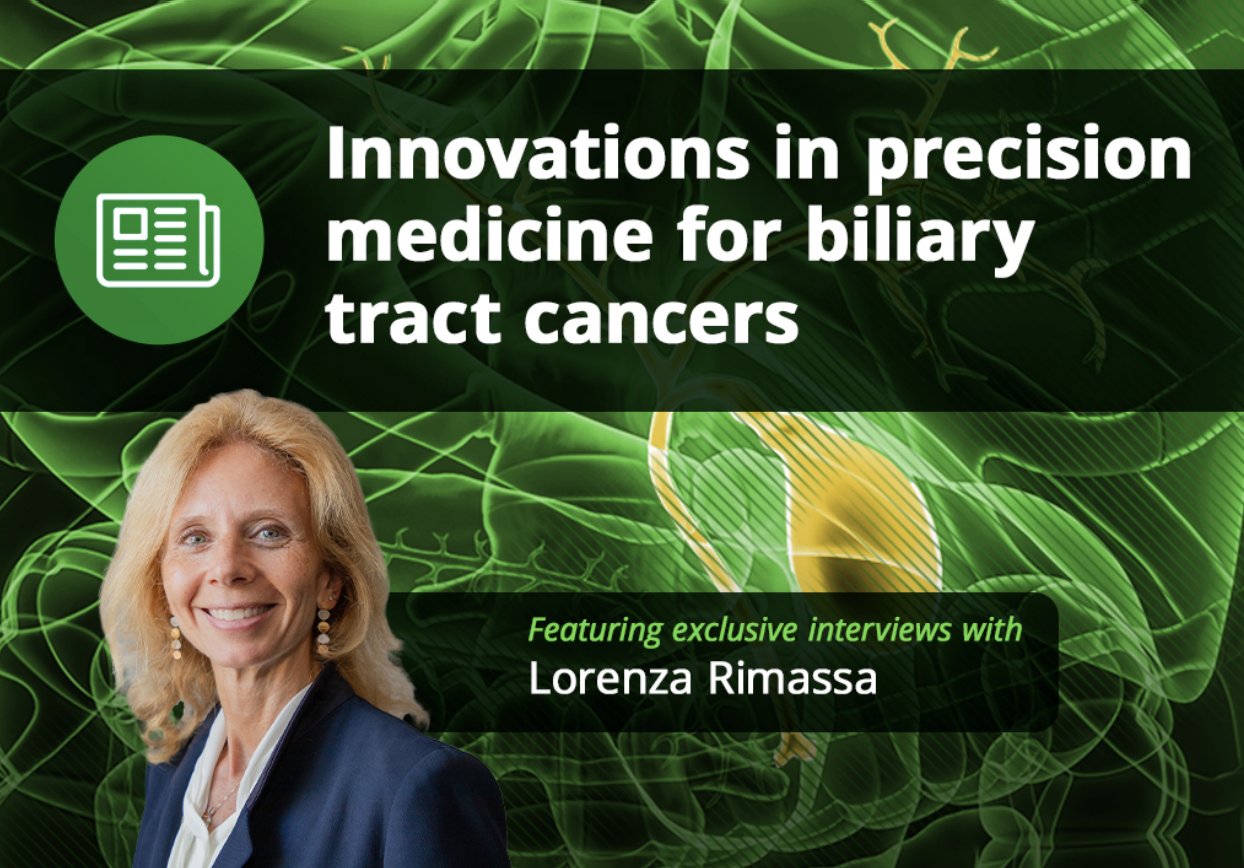
Innovations in precision medicine for biliary tract cancers
New targets, new therapies, overcoming resistance, and IO combination approaches
Biliary tract cancers (BTCs), encompassing intrahepatic and extrahepatic cholangiocarcinoma as well as gallbladder carcinoma, remain aggressive malignancies associated with high morbidity and poor overall survival (OS). Historically, therapeutic options have been limited, with systemic cytotoxic chemotherapy offering only modest survival benefits. However, recent advancements in molecular characterization, targeted therapeutics, and immuno-oncology (IO) have led to clinically meaningful progress. The increasing feasibility of molecular profiling and biomarker-driven approaches has ushered in a new era of precision oncology for this historically intractable disease.
Molecular alterations and targeted therapies
The incorporation of next-generation sequencing into routine clinical practice has enabled the identification of actionable genomic alterations in approximately 30–50% of patients with advanced BTC.1 Among these, FGFR2 gene fusions are the most extensively characterized, particularly in intrahepatic cholangiocarcinoma (iCCA) where they occur in up to 15% of cases. Selective FGFR inhibitors such as pemigatinib and futibatinib have demonstrated objective response rates (ORRs) in the range of 35–40% and progression-free survival (PFS) of approximately six to nine months in patients with FGFR2-rearranged tumors, leading to their regulatory approval in second-line settings.2,3 Resistance, primarily due to secondary mutations in the FGFR2 kinase domain, remains a significant clinical challenge, prompting the development of next-generation inhibitors with activity against these resistance mutations.
Isocitrate dehydrogenase 1 (IDH1) mutations, detected in ~13% of iCCA, represent another actionable target. The Phase III ClarIDHy trial (NCT02989857) demonstrated a statistically significant improvement in PFS with the IDH1 inhibitor ivosidenib versus placebo in patients with previously treated IDH1-mutated cholangiocarcinoma.4 While the median PFS benefit was modest, ivosidenib was well tolerated, and exploratory analyses suggest a potential OS benefit with adjusted crossover analyses. Ongoing investigations are assessing rational combinations with epigenetic and metabolic modulators to augment efficacy.
Amplification and overexpression of ERBB2 (HER2) are more frequently observed in extrahepatic cholangiocarcinoma and gallbladder carcinoma. HER2-targeted therapies, including trastuzumab-based regimens and the bispecific antibody zanidatamab, have demonstrated antitumor activity in early-phase trials. The HERIZON-BTC-01 trial (NCT04466891) evaluated zanidatamab in patients with previously treated HER2-positive BTC (defined as IHC 2+ or 3+ and HER2 amplification) and reported durable responses, particularly in Asian subpopulations.5
In a recent interview, Lorenza Rimassa, MD, from the IRCCS Humanitas Research Hospital, in Milan, Italy, provides insights into the HERIZON-BTC-01 and TOURMALINE (NCT05771480) studies. Dr Rimassa discusses the updated HERIZON-BTC-01 efficacy data in HER2-positive BTC, as well as findings from the Phase IIIb TOURMALINE trial evaluating durvalumab in combination with gemcitabine-based regimens.
These findings provide a rationale for the ongoing Phase III HERIZON-BTC-302 trial (NCT06282575), which is evaluating zanidatamab in combination with standard-of-care chemotherapy in the first-line treatment of HER2-positive BTC.6
Other rare but actionable genomic alterations include BRAF V600E mutations, NTRK fusions, and microsatellite instability-high (MSI-H) or mismatch repair deficiency (dMMR). Although uncommon (<2%), MSI-H/dMMR tumors exhibit high sensitivity to immune checkpoint inhibitors (ICIs), with durable responses observed in basket trials.7
Immunotherapy and combination strategies
The most significant paradigm shift in first-line therapy for BTC has come from the integration of ICIs with standard chemotherapy. The Phase III TOPAZ-1 trial (NCT03875235) demonstrated that the addition of durvalumab to gemcitabine and cisplatin significantly improved median OS compared with chemotherapy alone (12.9 vs 11.3 months; HR 0.76; p=0.021), with a manageable safety profile.8 Benefit was observed across key subgroups, regardless of PD-L1 expression. These findings led to the incorporation of durvalumab into frontline treatment recommendations. Subsequently, the KEYNOTE-966 study (NCT04003636) confirmed the benefit of pembrolizumab in combination with gemcitabine and cisplatin, further consolidating the role of ICI-based combinations as the new standard of care.9
In the post-platinum setting, however, the efficacy of single-agent ICIs remains limited. Response rates have been consistently low (<10%) in unselected populations. As such, combinatorial strategies are under active investigation. Dual immune checkpoint blockade (e.g., PD-1 + CTLA-4), ICIs combined with DNA damage repair inhibitors (e.g., ATR inhibitors), and multi-agent triplet regimens incorporating tyrosine kinase inhibitors (TKIs) and chemotherapy are being evaluated in ongoing trials. Real-world evidence supports these approaches. A recent retrospective cohort study from China reported that patients receiving a triplet regimen consisting of an ICI, multi-targeted TKI, and chemotherapy achieved a significantly higher ORR (37.2%) and longer median OS (16 months) compared with those receiving chemotherapy alone (ORR 2.8%, OS 6 months).10 Although non-randomized, these findings provide compelling justification for prospective evaluation.
Resistance mechanisms and functional precision strategies
Acquired resistance continues to limit the long-term efficacy of both targeted and IO therapies. In FGFR2-altered tumors, secondary mutations at key residues such as the gatekeeper position (V564) have been implicated in loss of drug binding.11 Sequential FGFR inhibition using structurally distinct agents may offer a strategy to overcome such resistance.
Efforts to mitigate resistance include combinations targeting parallel pathways, such as IDH inhibition with BCL-2 or MEK inhibition. Moreover, immunologic escape mechanisms, such as upregulation of alternate immune checkpoints or loss of antigen presentation, are being addressed through rational combination immunotherapies.
Patient-derived organoids and microfluidic organoid-on-a-chip systems are emerging as promising tools to model BTC heterogeneity ex vivo and screen therapeutic options. These platforms may facilitate real-time functional testing and accelerate the identification of effective combination strategies.12
Conclusions
The therapeutic landscape of BTC is undergoing rapid evolution. Molecularly targeted therapies against FGFR2, IDH1, and HER2, alongside immunotherapy-based regimens, are transforming treatment paradigms. Biomarker-driven trial design and expanded molecular testing are essential to optimize patient selection and improve outcomes.
As clinical experience with novel agents grows and resistance mechanisms are elucidated, combinatorial and sequential therapeutic strategies will be critical to enhancing durability of response. The integration of functional precision medicine platforms may further refine and personalize care. Continued investment in multicenter trials and translational research will be key to sustaining momentum in this emerging precision oncology paradigm for BTC.
References
- Albrecht Stenzinger, Vogel, A , Lehmann, U., Lamarca, A., et al. (2024). Molecular profiling in cholangiocarcinoma: A practical guide to next-generation sequencing. Cancer Treatment Reviews, 122 , 102649–102649. https://doi.org/10.1016/j.ctrv.2023.102649
- U.S. Food and Drug Administration. (2020). FDA grants accelerated approval to pemigatinib for cholangiocarcinoma with an FGFR2 rearrangement or fusion. https://www.fda.gov/drugs/drug-approvals-and-databases/fda-grants-accelerated-approval-pemigatinib-cholangiocarcinoma (Last accessed August 5, 2025)
- U.S. Food and Drug Administration. (2023). FDA grants accelerated approval to futibatinib for cholangiocarcinoma. https://www.fda.gov/drugs/resources-information-approved-drugs/fda-grants-accelerated-approval-futibatinib-cholangiocarcinoma (Last accessed August 5, 2025)
- Abou-Alfa, G. K., Macarulla, T., Javle, M. M., et al. (2020). Ivosidenib in IDH1-mutant, chemotherapy-refractory cholangiocarcinoma (ClarIDHy): A multicentre, randomised, double-blind, placebo-controlled, phase 3 study. The Lancet Oncology, 21(6), 796–807. https://doi.org/10.1016/S1470-2045(20)30157-1
- Meric-Bernstam, F., Shroff, R. T., Javle, M. M., et al. (2023). HERIZON-BTC-01: Zanidatamab in HER2-positive BTC. Journal of Clinical Oncology, 41(15_suppl), 4085. https://ascopubs.org/doi/10.1200/JCO.2023.41.15_suppl.4085
- Harding, J. J., Macarulla, T., Pant, S., et al. (2025). HERIZON-BTC-302: A phase 3 study of zanidatamab with standard-of-care (SOC) therapy vs SOC alone for first-line treatment of human epidermal growth factor receptor 2 (HER2)-positive advanced/metastatic biliary tract cancer (BTC). Journal of Clinical Oncology, 43(4_suppl). https://doi.org/10.1200/jco.2025.43.4_suppl.tps648
- Zhang, Y., Wei, L., Chen, H., et al. (2024). Triple combination therapy in advanced BTC: A retrospective cohort. Frontiers in Oncology, 14, 1482909. https://pmc.ncbi.nlm.nih.gov/articles/PMC9400790/
- Valle, J. W., Kelley, R. K., Zhu, A. X., et al. (2023). Durvalumab plus gemcitabine and cisplatin in advanced biliary tract cancer (TOPAZ-1): A multicentre, double-blind, randomised, placebo-controlled, phase 3 trial. The Lancet Oncology, 24(1), 146–158. https://doi.org/10.1016/S1470-2045(22)00743-2
- Kelley, R. K., Ueno, M., Yoo., et al. (2023). Pembrolizumab in combination with gemcitabine and cisplatin compared with gemcitabine and cisplatin alone for patients with advanced biliary tract cancer (KEYNOTE-966): a randomised, double-blind, placebo-controlled, phase 3 trial. The Lancet, 0(0). https://doi.org/10.1016/S0140-6736(23)00727-4
- Zhang, Y., Wei, L., Chen, H., et al. (2024). Triple combination therapy in advanced BTC: A retrospective cohort. Frontiers in Oncology, 14, 1482909. https://pubmed.ncbi.nlm.nih.gov/39730074/
- Wu, Q., Ellis, H., Siravegna, G., et al. (2023). Landscape of Clinical Resistance Mechanisms to FGFR Inhibitors in FGFR2-Altered Cholangiocarcinoma. Clinical Cancer Research, 30(1), 198–208. https://doi.org/10.1158/1078-0432.ccr-23-1317
- Tieu, R., Mertz, R. A., Wang, M., et al. (2025). Functional organoid-on-a-chip platforms for BTC drug screening. arXiv Preprint, arXiv:2507.21149. https://arxiv.org/abs/2507.21149
