The Lung Cancer Channel is supported with funding from Johnson & Johnson (Gold) and Takeda (Gold).
VJOncology is an independent medical education platform. Supporters, including channel supporters, have no influence over the production of content. The levels of sponsorship listed are reflective of the amount of funding given to support the channel.
WCLC 2025 | Reducing mortality rates and gender disparities in lung cancer care
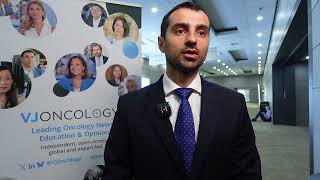
Muhammad Islam, MBBS, MD, MSPh, FACP, University of Chicago, Chicago, IL, highlights that despite advancements in lung cancer treatment, mortality rates are unlikely to decline significantly in the next 25 years due to factors such as the increasing prevalence of lung cancer in certain populations, the need for more effective treatments for specific mutations, and the challenges of delivering chemotherapy drugs. Looking forward, clinicians should address gender disparities in lung cancer, as well as develop more efficient drug delivery systems to improve patient outcomes and reduce mortality. This interview took place at 2025 World Conference on Lung Cancer (WCLC) in Barcelona, Spain.
These works are owned by Magdalen Medical Publishing (MMP) and are protected by copyright laws and treaties around the world. All rights are reserved.
Transcript
After analyzing the last 25 years of data, then we try to develop a predictive model with our machine learning thing, our MX model, and we found astonishing results. In 2030, the lung cancer modality is not going to go down as well as it did in the last 25 years. So, because of what, because they have developed their HDI index very much, almost perfect to one. They have developed so many drugs, they have developed strict controls on PM and environmental levels, as well as anti-tobacco policies...
After analyzing the last 25 years of data, then we try to develop a predictive model with our machine learning thing, our MX model, and we found astonishing results. In 2030, the lung cancer modality is not going to go down as well as it did in the last 25 years. So, because of what, because they have developed their HDI index very much, almost perfect to one. They have developed so many drugs, they have developed strict controls on PM and environmental levels, as well as anti-tobacco policies. But still, there is something to do to reduce lung cancer mortality for the next 30 years. So now we have to focus on why lung cancer mortality is not going down in the next 25 years. What are the other factors impeding it? Now we are looking for other factors like gender issues. We are trying to find out if male lung cancer and female lung cancer are the same or not. So we have to focus on that thing and we have to also focus on what are the recurrence and relapses of the disease. So when we are treating lung cancer with so many drugs, the mutation pathway, the pathogenesis, everything is changing. So we have to focus on the other parts. You know, interestingly, there are some mutations for which we have drugs only for 30% of lung cancer, but the rest of the 70% we treat patients only with chemotherapy drugs. So we need to focus on that part. What are the delivery systems of the drugs? What are the new chemotherapy drugs we need? So that is the main challenge for the next 30 years. I think we should have some other concerns regarding gender biasness as well as developing the drug delivery system so that we can improve patient outcomes as well as reduce the mortality of patients.
This transcript is AI-generated. While we strive for accuracy, please verify this copy with the video.
Read more...