The Lung Cancer Channel is supported with funding from Johnson & Johnson (Gold) and Takeda (Gold).
VJOncology is an independent medical education platform. Supporters, including channel supporters, have no influence over the production of content. The levels of sponsorship listed are reflective of the amount of funding given to support the channel.
WCLC 2025 | New treatment strategies for oligo-progressive non-small cell lung cancer
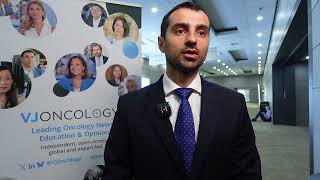
Fabio Arcidiacono, MD, Radiotherapy Oncology Centre “S. Maria” Hospital, Terni, Italy, comments on the significance of the findings from the Phase II START-NEW-ERA #OLIGO trial (NCT06207292) in patients with oligo-progressive lung cancer. These patients can maintain systemic treatment, immunotherapy, and targeted therapy without changing or starting new systemic therapy, allowing for a longer continuation of ongoing treatment. This interview took place at 2025 World Conference on Lung Cancer (WCLC) in Barcelona, Spain.
These works are owned by Magdalen Medical Publishing (MMP) and are protected by copyright laws and treaties around the world. All rights are reserved.
Transcript
A lot of my work is looking at real-world healthcare delivery and outcomes, acknowledging the fact that most of oncology practice is outside of the very well-controlled world of clinical trials, right? And so part of the work that we presented earlier is that we took a look at after folks receive their appropriate genomic profiling on their cancer, were they getting the correct targeted therapy? Anyone at a conference like this would say, okay, 100% of people should receive these less toxic, more effective therapies, but that just wasn’t the case...
A lot of my work is looking at real-world healthcare delivery and outcomes, acknowledging the fact that most of oncology practice is outside of the very well-controlled world of clinical trials, right? And so part of the work that we presented earlier is that we took a look at after folks receive their appropriate genomic profiling on their cancer, were they getting the correct targeted therapy? Anyone at a conference like this would say, okay, 100% of people should receive these less toxic, more effective therapies, but that just wasn’t the case. And so we wanted to take a look at the proportion of patients with each type of mutation that got their appropriate targeted therapy and who were the patients most at risk for receiving suboptimal therapy based on those characteristics. Thanks.
This transcript is AI-generated. While we strive for accuracy, please verify this copy with the video.
Read more...