The Lung Cancer Channel is supported with funding from Johnson & Johnson (Gold) and Takeda (Gold).
VJOncology is an independent medical education platform. Supporters, including channel supporters, have no influence over the production of content. The levels of sponsorship listed are reflective of the amount of funding given to support the channel.
WCLC 2025 | TRIDENT-1: long-term results of repotrectinib in ROS+ NSCLC
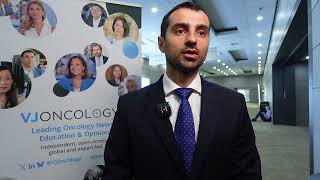
Byoung Chul Cho, MD, PhD, Yonsei University, Seoul, South Korea, discusses results from the Phase I/II TRIDENT-1 trial (NCT03093116) of repotrectinib in patients with ROS1 fusion-positive non-small cell lung cancer (NSCLC). Repotrectinib showed durable clinical benefit in both tyrosine kinase inhibitor-naïve and previously treated patients, including intracranial activity. Safety findings were consistent with prior reports, with manageable adverse events. This interview took place at 2025 World Conference on Lung Cancer (WCLC) in Barcelona, Spain.
These works are owned by Magdalen Medical Publishing (MMP) and are protected by copyright laws and treaties around the world. All rights are reserved.
Transcript
TRIDENT-1 is a global phase 1 to clinical trial which evaluated repotrectinib in ROS1 positive and TRK positive ROS1 positive NSCLC and TRK positive solid tumors. So during World Lung this year we presented a long-term follow-up of repotrectinib in ROS1 Fusion positive advanced stage NSCLC. So we reported two long-term follow-up data with median follow-up of longer than 42 months in advanced stage ROS1 positive NSCLC...
TRIDENT-1 is a global phase 1 to clinical trial which evaluated repotrectinib in ROS1 positive and TRK positive ROS1 positive NSCLC and TRK positive solid tumors. So during World Lung this year we presented a long-term follow-up of repotrectinib in ROS1 Fusion positive advanced stage NSCLC. So we reported two long-term follow-up data with median follow-up of longer than 42 months in advanced stage ROS1 positive NSCLC. We focus specifically on TKI naive cohort and cohort with one prior ROS1 TKI and no prior chemotherapy. First of all I want to talk about objective response rate in these two cohorts. Repotrectinib produced a confirmed objective response rate of about 70% in TKI naive and about 40% in TKI pre-treated cohort. We also reported favorable intracranial outcomes in both cohorts. Intracranial objective response rate was over 80% with long intracranial duration response in TKI-naive patient population and intracranial ORR of around 40% in TKI-pretreated patient cohort. Confirmed objective response rate in G2032R, so often from mutation positive, was observed in one patient, we observed a 56% confirmed objective response rate.
This transcript is AI-generated. While we strive for accuracy, please verify this copy with the video.
Read more...