The Lung Cancer Channel is supported with funding from Johnson & Johnson (Gold) and Takeda (Gold).
VJOncology is an independent medical education platform. Supporters, including channel supporters, have no influence over the production of content. The levels of sponsorship listed are reflective of the amount of funding given to support the channel.
BTOG 2026 | Robotic bronchoscopy enables lung ablation and combination therapies
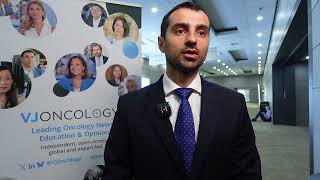
Ricky Thakrar, MBBS, MRCP, PhD, University College London, London, UK, comments on the potential of robotic bronchoscopy as a platform for accessing the lung and its periphery, enabling various therapies such as microwave ablation and radiofrequency ablation to eradicate tumors. There is also potential synergy between thermal ablative techniques and immunotherapies, as well potential benefit in combining these technologies with treatments for patients with oligometastatic disease. This interview took place at the 2026 British Thoracic Oncology Group (BTOG) congress in Edinburgh, UK.
These works are owned by Magdalen Medical Publishing (MMP) and are protected by copyright laws and treaties around the world. All rights are reserved.
Transcript
So the really nice thing about robotic bronchoscopy is that it’s more than just a technology to biopsy lung nodules. It is a platform that allows us to safely and reliably access the lung and the periphery of the lung and lung nodules when we need to. And so we’re going to see a whole wealth of technologies coming in, including therapies using microwave ablation or radiofrequency ablation to eradicate tumors, using those same thermal ablative techniques in combination with immunotherapies to upregulate neoantigens and create the synergy with immunotherapy...
So the really nice thing about robotic bronchoscopy is that it’s more than just a technology to biopsy lung nodules. It is a platform that allows us to safely and reliably access the lung and the periphery of the lung and lung nodules when we need to. And so we’re going to see a whole wealth of technologies coming in, including therapies using microwave ablation or radiofrequency ablation to eradicate tumors, using those same thermal ablative techniques in combination with immunotherapies to upregulate neoantigens and create the synergy with immunotherapy. And there have also been studies showing that this thermal ablative technology can be combined with patients with oligometastatic disease and that improves progression-free survival. And this is thought to be by the hypothesis here would be that these patients who have oligometastatic disease might have subclones that are resistant to treatment and potentially providing that later therapy might help give a synergy to the treatment they’re already on. There are other really interesting technologies for therapy that are coming and there will be potentially dendritic cell vaccines that we can inject directly into tumors and in a way to increase PD-L1 expression.
This transcript is AI-generated. While we strive for accuracy, please verify this copy with the video.
Read more...