ASCO 2026 | Genomic signatures linked to immunosuppression in R/M HNSCC
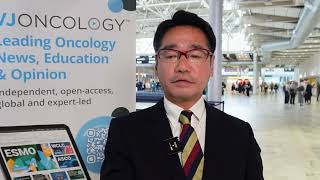
Marcelo Bonomi, MD, The Ohio State University, Columbus, OH, discusses a subgroup of patients with recurrent/metastatic head and neck squamous cell carcinoma (R/M HNSCC) and persistent high levels of immunosuppressive cytokines, as well as the potential correlation with pre-treatment mutations. A signature that combines mutations in three key genes, including TP53, CDKN2A, and promoter mutations is associated with a systemic inflammatory immunosuppressive effect, which may require more combinations of immunotherapy treatments. This interview took place during the 2026 American Society of Clinical Oncology (ASCO) Meeting in Chicago, IL.
These works are owned by Magdalen Medical Publishing (MMP) and are protected by copyright laws and treaties around the world. All rights are reserved.
Transcript
This is still a work in progress, okay? But as I said, you know, there is a subgroup of patients that we think that have persistent high levels of these immunosuppressive cytokines. You know, in the process of doing next-generation sequencing to see if there is any correlation between pre-treatment mutations with these high levels. Within that, there is a signature that combines three key genes, which is mutation of TP53, CDKN2A, and third, promoter mutations that are associated with a systemic inflammatory immunosuppressive effect...
This is still a work in progress, okay? But as I said, you know, there is a subgroup of patients that we think that have persistent high levels of these immunosuppressive cytokines. You know, in the process of doing next-generation sequencing to see if there is any correlation between pre-treatment mutations with these high levels. Within that, there is a signature that combines three key genes, which is mutation of TP53, CDKN2A, and third, promoter mutations that are associated with a systemic inflammatory immunosuppressive effect. And these are probably the patients that will need more combinations of immunotherapy treatments.
This transcript is AI-generated. While we strive for accuracy, please verify this copy with the video.
Read more...