ESMO 2026 | Investigational immunotherapy updates at ESMO 2026
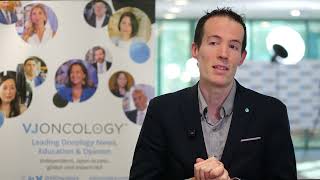
Sebastian Kobold, MD, PhD, Ludwig Maximilian University of Munich, Munich, Germany, discusses the three therapeutic axes that aim to bolster the activity of T-cells in cancer treatment, including targeting inhibitory pathways, redirecting T-cells towards cancer cells, and developing novel cancer vaccines. These strategies, which have been reported in early clinical trials, focus on harnessing the immune system to treat cancer by targeting key molecules and pathways that suppress T-cell activity in the tumor microenvironment. This interview took place at the European Society for Medical Oncology (ESMO) 2026 Congress in Madrid, Spain.
These works are owned by Magdalen Medical Publishing (MMP) and are protected by copyright laws and treaties around the world. All rights are reserved.
Transcript
The highlights really revolve around three therapeutic axes, which all of them actually hit one type of cell, which is the T-cell, which is a cell we’ve all known for a very long time to be quite important in how we can use the immune system to treat cancer. And so the three strategies that have been used to bolster the activity of these cells in the frame of clinical trials, early clinical trials reported at this ESMO have been, one, to target key inhibitory pathways beyond PD-1, which we all know very well to be very important, and trying to harness different molecules that are suppressing T-cells in the tumor microenvironment, like VEGF, like CTLA-4 in conjunction with one molecule, TGF-beta to name a few...
The highlights really revolve around three therapeutic axes, which all of them actually hit one type of cell, which is the T-cell, which is a cell we’ve all known for a very long time to be quite important in how we can use the immune system to treat cancer. And so the three strategies that have been used to bolster the activity of these cells in the frame of clinical trials, early clinical trials reported at this ESMO have been, one, to target key inhibitory pathways beyond PD-1, which we all know very well to be very important, and trying to harness different molecules that are suppressing T-cells in the tumor microenvironment, like VEGF, like CTLA-4 in conjunction with one molecule, TGF-beta to name a few. The second axis is how to redirect T-cells specifically towards the cancer cell. And this can be done either through therapeutic proteins or like a bispecific antibody-like molecule, mimicking, for instance, the T-cell or the MHC to harness T-cell specific for a certain cancer-associated antigen towards the cancer cell. It could be done in the frame of the cell therapies where you engineer the T-cell for specificity. And the last building block that has been reported as well as novel strategies of cancer vaccines either utilizing personalized dendritic cell approaches against neoantigens identified specifically for the cancer patient or using peptide-based vaccination strategies against neoantigens, which can be then augmented by a targeted type of radiation therapy that was presented at this conference.
This transcript is AI-generated. While we strive for accuracy, please verify this copy with the video.
Read more...