The Lung Cancer Channel is supported with funding from Johnson & Johnson (Gold) and Takeda (Gold).
VJOncology is an independent medical education platform. Supporters, including channel supporters, have no influence over the production of content. The levels of sponsorship listed are reflective of the amount of funding given to support the channel.
WCLC 2025 | Early outcomes from the Croatian National Lung Cancer Screening Program
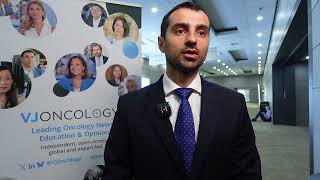
Miroslav Samaržija, MD, PhD, University Hospital Centre Zagreb, Zagreb, Croatia, discusses results from the Croatian National Lung Cancer Screening Program, the first nationwide initiative of its kind in the European Union. Implemented in 2020, the program integrates low-dose CT and volumetric nodule analysis within routine healthcare. Early detection of other diseases such as emphysema was also performed. This interview took place at 2025 World Conference on Lung Cancer (WCLC) in Barcelona, Spain.
These works are owned by Magdalen Medical Publishing (MMP) and are protected by copyright laws and treaties around the world. All rights are reserved.
Transcript
That was a really huge program started five years ago as a self-sustaining program completely covered by the government; all costs were reimbursed. It is a national program, which means that it is organized in 24 centers and lasts for five years. When we are talking about the numbers, until the last year we scanned more than 50,000 participants, more than 70,000 low-dose CT scans...
That was a really huge program started five years ago as a self-sustaining program completely covered by the government; all costs were reimbursed. It is a national program, which means that it is organized in 24 centers and lasts for five years. When we are talking about the numbers, until the last year we scanned more than 50,000 participants, more than 70,000 low-dose CT scans. It is very huge, robust data. And for the first time, we showed the results of everything. The first and probably the main important numbers are the percentage of confirmed cancers, which is 2% of the whole population. When we are talking about the positive scans, in fact, 15% of scans were positive. But we didn’t do only the early diagnosis of lung nodules and lung cancer. The program from the beginning is designed to make early diagnosis of emphysema and coronary calcification as well, which means that at this moment we have percentages and frequency of emphysema, which is above 40%, and coronary calcification even higher, above 60%. At this moment, it is very hard to translate what that means for the future workup and how to translate those huge percentages into early diagnosis of COPD and cardiovascular diseases. But regarding the lung cancer nodule, we followed the very precise guidelines and until now approximately 400 patients underwent surgery. 30% of them were found to have lung cancer in stage one, which means that the majority of them will be cured with the implementation of the national screening program. That is the importance of the whole program: to increase the cure rate.
This transcript is AI-generated. While we strive for accuracy, please verify this copy with the video.
Read more...