The Lung Cancer Channel is supported with funding from Johnson & Johnson (Gold) and Takeda (Gold).
VJOncology is an independent medical education platform. Supporters, including channel supporters, have no influence over the production of content. The levels of sponsorship listed are reflective of the amount of funding given to support the channel.
WCLC 2025 | Validation of the INTEGRAL-Risk protein model for lung cancer screening
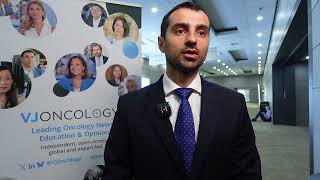
Mattias Johansson, PhD, International Agency for Research on Cancer, Lyon, France, comments on the validation of a protein-based INTEGRAL-Risk model within the LC3 consortium, designed to refine eligibility for low-dose CT lung cancer screening. The model integrates age, smoking history, and protein biomarkers, demonstrating improved accuracy compared with smoking-based tools such as PLCOm2012. Findings showed consistent performance across racial and ethnic groups and identified a greater proportion of high-risk cases while reducing low-yield screening. This approach may enable more precise selection of individuals who benefit from screening. This interview took place at 2025 World Conference on Lung Cancer (WCLC) in Barcelona, Spain.
These works are owned by Magdalen Medical Publishing (MMP) and are protected by copyright laws and treaties around the world. All rights are reserved.
Transcript
This is work that we’ve done, which thus far has a focus on people with a smoking history. And it sort of addresses the issue of lung cancer screening. Current screening and eligibility criteria capture approximately 50% of all lung cancer cases that occur. In some populations, even less. So we’ve been developing lung cancer biomarkers that we can use to identify those high-risk people...
This is work that we’ve done, which thus far has a focus on people with a smoking history. And it sort of addresses the issue of lung cancer screening. Current screening and eligibility criteria capture approximately 50% of all lung cancer cases that occur. In some populations, even less. So we’ve been developing lung cancer biomarkers that we can use to identify those high-risk people. And we see now that in people with a smoking history, we can increase the identification of future lung cancer cases by, say, 20% in comparison to the traditional screening criteria. And we’re now looking to translate these findings and these methods that we’ve been using also to people who never smoked.
This transcript is AI-generated. While we strive for accuracy, please verify this copy with the video.
Read more...