The Lung Cancer Channel is supported with funding from Johnson & Johnson (Gold) and Takeda (Gold).
VJOncology is an independent medical education platform. Supporters, including channel supporters, have no influence over the production of content. The levels of sponsorship listed are reflective of the amount of funding given to support the channel.
WCLC 2025 | Upper age limits in lung cancer screening: outcomes from UK cohorts
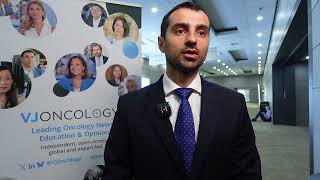
Matthew Callister, PhD, Leeds Teaching Hospitals NHS Trust, Leeds, UK, comments on results from a multi-centre cohort analysis of the Yorkshire Lung Screening Trial (YLST; NCT03750110) and North & East Manchester Lung Health Check (NEM-LHC), comparing outcomes for lung cancer screening in individuals aged 55–74 versus 75–80. While older patients had similar stage distribution at diagnosis, surgical resection rates were lower and overall survival was reduced. However, those who underwent surgery achieved outcomes comparable to younger patients, supporting screening decisions guided by surgical fitness in older populations. This interview took place at 2025 World Conference on Lung Cancer (WCLC) in Barcelona, Spain.
These works are owned by Magdalen Medical Publishing (MMP) and are protected by copyright laws and treaties around the world. All rights are reserved.
Transcript
This is some work that we’ve done from the Yorkshire Lung Screening Trials and Leeds together with the Manchester Lung Health Check, so we pooled our data. Both programmes were running before we had a national programme in England and both of them went up to 80. So we’ve been able to look at outcomes between the 75 to 80 year old cohort. Obviously the national programme now stops at 75 and the reason for that is that, I mean, all screening programs have to stop at some age...
This is some work that we’ve done from the Yorkshire Lung Screening Trials and Leeds together with the Manchester Lung Health Check, so we pooled our data. Both programmes were running before we had a national programme in England and both of them went up to 80. So we’ve been able to look at outcomes between the 75 to 80 year old cohort. Obviously the national programme now stops at 75 and the reason for that is that, I mean, all screening programs have to stop at some age. And the concern, I think, when you go above 75 is people might not be fit enough for treatment. And there are lots of other reasons why, unfortunately, why people in this age group die. And so the benefits you get from screening might be reduced as a result. So we looked at survival of people above 75 versus below 75. And we also looked at the survival depending on what treatment modality you’ve got. What we found is that overall, and perhaps this isn’t surprising, the survival of people 75 to 80 is a bit worse than people below 75. I guess we would expect that. Some of that will be their outcomes from cancer are worse, but I think a lot of it is that they die of other comorbid diseases. But what we found is when we looked at the 75 to 80 year old group who got surgery for their diagnosed lung cancer, they did just as well as the people under 75 who got surgery, so we would suggest that there is a cohort in this 75 to 80 year old population who are really going to benefit from CT screening. It might be a bit of a challenge to identify them because they need to be fit enough, ideally, to have lung cancer surgery, but we’re looking at lots of different ways as to how you might identify this group, because you know the bottom line is we want to get more people into screening, more people who will benefit from the program into screening.
This transcript is AI-generated. While we strive for accuracy, please verify this copy with the video.
Read more...