The Lung Cancer Channel is supported with funding from Johnson & Johnson (Gold).
VJOncology is an independent medical education platform. Supporters, including channel supporters, have no influence over the production of content. The levels of sponsorship listed are reflective of the amount of funding given to support the channel.
WCLC 2025 | Integrating AI with LDCT and liquid biopsy for early lung cancer detection
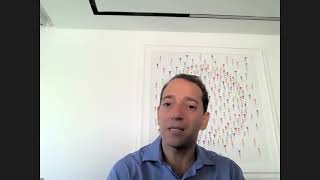
Sewanti Limaye, MBBS, MD, MS, Sir H. N. Reliance Foundation Hospital & Research Centre, Mumbai, India, gives an overview of a layered strategy for early lung cancer detection that combines artificial intelligence (AI)-based risk stratification, low-dose CT (LDCT), and plasma circulating tumor (ctDNA) analysis. In a cohort of 1,000 high-risk individuals, AI screening guided LDCT use, with liquid biopsy applied to those with radiologic abnormalities. ctDNA positivity identified a subset for structured follow-up, supporting a more targeted approach. This approach enables more efficient screening in resource limited settings. This interview took place at 2025 World Conference on Lung Cancer (WCLC) in Barcelona, Spain.
These works are owned by Magdalen Medical Publishing (MMP) and are protected by copyright laws and treaties around the world. All rights are reserved.
Transcript
So I feel lung cancer early detection is a subject not being really given any attention in a subcontinent as large as India. In a billion and a half population we are actually representing non-smokers with lung cancer to a large percentage but we are lacking proper risk assessing tools to test for those at risk to develop lung cancer. So with this protocol and project the idea is to risk stratify the population based on risk stratification of those at risk for lung cancer, at a higher risk for lung cancer than the others, and we utilize an algorithm which is AI-powered with which we try to assess the symptoms and the clinical history to risk stratify a patient into a category of high risk, intermediate risk, and low risk, and those at high risk and intermediate risk were all then brought in for low-dose CT and liquid biopsy, where we are looking at circulating tumor DNA and circulating tumor cells in this context, and those then showed to have any findings on liquid biopsy and the low-dose CT then get tracked and followed, and those that can get actual biopsy after tracking and are high risk, then we have done actual biopsies for these patients...
So I feel lung cancer early detection is a subject not being really given any attention in a subcontinent as large as India. In a billion and a half population we are actually representing non-smokers with lung cancer to a large percentage but we are lacking proper risk assessing tools to test for those at risk to develop lung cancer. So with this protocol and project the idea is to risk stratify the population based on risk stratification of those at risk for lung cancer, at a higher risk for lung cancer than the others, and we utilize an algorithm which is AI-powered with which we try to assess the symptoms and the clinical history to risk stratify a patient into a category of high risk, intermediate risk, and low risk, and those at high risk and intermediate risk were all then brought in for low-dose CT and liquid biopsy, where we are looking at circulating tumor DNA and circulating tumor cells in this context, and those then showed to have any findings on liquid biopsy and the low-dose CT then get tracked and followed, and those that can get actual biopsy after tracking and are high risk, then we have done actual biopsies for these patients. So it is essentially a method to risk stratify the population to be able to personalize the screening in an effort to be more resource aware in a resource-limited nation.
This transcript is AI-generated. While we strive for accuracy, please verify this copy with the video.
Read more...