The Lung Cancer Channel is supported with funding from Johnson & Johnson (Gold).
VJOncology is an independent medical education platform. Supporters, including channel supporters, have no influence over the production of content. The levels of sponsorship listed are reflective of the amount of funding given to support the channel.
WCLC 2022 | Impact of [18F]FDG PET/CT-derived metabolic parameters on outcomes in extensive-stage SCLC
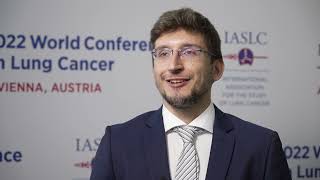
Giuseppe Lamberti, MD, University Hospital of Bologna, Bologna, Italy, provides an overview of a retrospective analysis investigating the capacity of [18F]FDG-PET/CT to predict patient outcomes via measuring metabolic tumor volume (MTV) or its total lesion glycolysis in patients with extensive stage small cell lung cancer (ES-SCLC). Patients had undergone an [18F]FDG PET/CT scan within 30 days before the start of first-line treatment for ES-SCLC. The primary endpoint was overall-survival (OS). At a median follow-up of 20.9 months, the median OS was 11.1 months and the median progression-free survival (PFS) was 6.2 months. Total MTV was independently associated with OS and PFS, while SUVmax was independently associated with PFS. Overall, the preliminary data showed that total MTV could provide prognostic information in patients with ES-SCLC, suggesting a potential role as stratification factor in clinical trials. This interview took place at the IASLC 2022 World Conference on Lung Cancer congress in Vienna, Austria.