The Lung Cancer Channel is supported with funding from Johnson & Johnson (Gold) and Takeda (Gold).
VJOncology is an independent medical education platform. Supporters, including channel supporters, have no influence over the production of content. The levels of sponsorship listed are reflective of the amount of funding given to support the channel.
ASCO 2022 | Findings from the Sexual Health Assessment in Women with Lung Cancer (SHAWL) study
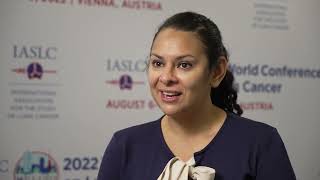
Narjust Florez, MD, Dana-Farber Cancer Institute and Harvard Medical School, Boston, MA, provides an overview of the Sexual Health Assessment in Women with Lung Cancer (SHAWL) study. SHAWL is the largest study to date evaluating sexual dysfunction in woman with lung cancer, involving over 300 patients from more than 10 countries. Findings demonstrated 2/3 of the woman recruited were facing severe sexual dysfunction. Dr Durma explains the association of sexual health with self-esteem and pain, necessitating the requirement to address the issue of sexual health and dysfunction in lung cancer. This interview took place at the American Society of Clinical Oncology (ASCO) 2022 Annual Meeting in Chicago, IL.
Transcript
Before I talk through the results I want to quickly talk about the methods. So the SHAWL study is a IRB approved international study that evaluated sexual health in women with lung cancer. It was host at the Lung Cancer Registry, which is part of the go-to foundation for lung cancer. The study was designed by a multidisciplinary team, including OBGYN, pelvic surgeons, a sexual counselor, and very importantly, two patient advocates...
Before I talk through the results I want to quickly talk about the methods. So the SHAWL study is a IRB approved international study that evaluated sexual health in women with lung cancer. It was host at the Lung Cancer Registry, which is part of the go-to foundation for lung cancer. The study was designed by a multidisciplinary team, including OBGYN, pelvic surgeons, a sexual counselor, and very importantly, two patient advocates. We incorporated a multidisciplinary team and use a validated questionnaire to get the results of the SHAWL study.
So what did the SHAWL study show? Well, we recruited 249 women. The ages range from late 20s, all the way to 80. These women have, the majority had a stage four lung cancer, the majority had adenocarcinoma and over 60% were receiving targeted therapy. We used the PROMIS questionnaire about sexual health assessment and functionability. And this address sexuality, within 30 days and also desire and interest in any type of sexual activity.
And to our listeners, I think is important to mention that sexual activity is not only intercourse. It’s sexual health and intimacy. That includes kissing, cuddling, anal penetration, any type of genital stimulation, including masturbation. So that’s what we define as sexual health because as sexual health, we are holistics and it’s not only penetrated sex. What we found was the striking and very sobering, 77% of the study participants had severe sexual dysfunction. And into that, a lot of majority of patients have little to no interest in sexual health even with themself, including masturbation.
What were the most common causes of this lack of interest? The number one was fatigue. And I think that’s a side effect that we often forget from our cancer therapies. Fatigue can range for grade 1 all the way to grade 4 and it can affect our patient’s daily life. The second reason for sexual lack of interest or dysfunction was shortness of breath and that’s something very unique to patients with lung cancer. Our patients get large surgeries. They have radiation to their chest and it affects their lung capacity.
And why is this important you wonder? Well, we continue to extrapolate data from breast cancer to treat sexual dysfunction in women with lung cancer. And they’re very different diseases. When you look at the studies in breast cancer, shortness of breath is at the bottom of the list. Here, it was our number two reason. So we need to personalize sexual health in our patients.
The number three reason was depression or feeling low and down. And that brings to attention the multidisciplinary approach for sexual health. It’s not only about organs. It’s not only about low hormone levels. It’s about feeling down, you’re facing a fatal disease.
And the last effect was issues with your partner. And that’s important because issues with your partner has been associated with high stress, higher depression. And the lack of communication about sexual health is one of the reasons why issues with the partner can raise.
And finally, what was the effect of lung cancer on sexual health? Well we evaluated factors before lung cancer diagnosis and after lung cancer diagnosis, vaginal dryness was significantly higher after lung cancer diagnosis. It’s very hard to have penetrative sex or having sex with yourself with vibrators or toys if you have significant vaginal dryness. It may sound like a simple solution for vaginal dryness, but it’s quite complex and it follows stigma. It can be very hard for a woman older or older generations to walk into a sex shop. But like I told my patients, the internet is there for a reason. And it’s an opportunity for patients to get lubricants and moisturizers for vaginal dryness, which are different. A lubricant and a moisturizer is different.
And another thing that we found before and after lung cancer diagnosis was pain with intercourse and this is pain and bleeding with intercourse. So these women significantly have more pain and discomfort with vaginal penetration after lung cancer diagnosis. How can you find pleasure in an activity that produces bleeding and pain?
So as a summary, the results of the SHAWL study show that the prevalence of sexual dysfunction in women with lung cancer is extremely high. It needs to be addressed. It will improve our patients quality of life. And in addition, it will improve their communication with the healthcare team and their partner if they have a partner, because it’s also important to mention that sexual health doesn’t mean you have to be partnered. You can be single, you can be widowed, you can still have an active sex life.
Read more...