The Gastrointestinal Cancer Channel is supported with funding from Revolution Medicines (Silver).
The Lung Cancer Channel is supported with funding from Johnson & Johnson (Gold).
VJOncology is an independent medical education platform. Supporters, including channel supporters, have no influence over the production of content. The levels of sponsorship listed are reflective of the amount of funding given to support the channel.
ASCO 2023 | Incidence, landscape and survival outcome of de novo malignancy after double lung transplantation
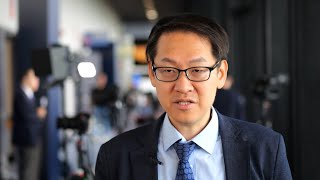
Young Kwang Chae, MD, MPH, MBA, National Cancer Institute, Bethesda, talks on an investigation into post-transplant malignancy incidence after double lung transplantation (DLT) using data from the Organ Procurement Transplantation Network (OPTN) registry. Among 23,935 cases, 23.5% had post-transplant malignancy. Recipients with post-transplant malignancy showed a longer overall-survival (OS) compared to those without. The most common malignancies were squamous cell skin cancer, basal cell skin cancer, lymphoma, lung cancer, and colorectal cancer. The risk of post-transplant malignancy was highest within the first 3-5 years post-transplantation. The lifetime incidence of post-transplant malignancy following DLT was found to be 20.1%. Further research is needed to understand the underlying mechanisms for increased malignancy risk and its association with OS after DLT. This interview took place at the American Society of Clinical Oncology (ASCO) 2023 Annual Congress in Chicago, IL.
These works are owned by Magdalen Medical Publishing (MMP) and are protected by copyright laws and treaties around the world. All rights are reserved.