The Lung Cancer Channel is supported with funding from Johnson & Johnson (Gold) and Takeda (Gold).
VJOncology is an independent medical education platform. Supporters, including channel supporters, have no influence over the production of content. The levels of sponsorship listed are reflective of the amount of funding given to support the channel.
WCLC 2025 | Tumor microenvironment in NSCLC with radon and tobacco exposure
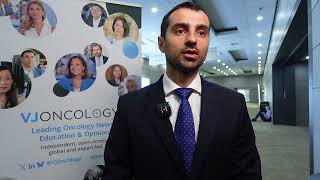
Marta Garcia de Herreros, MD, Hospital Clinic Barcelona, Barcelona, Spain, discusses findings from the MIRROR study, which evaluated the tumor microenvironment (TME) in patients with non-small cell lung cancer (NSCLC) exposed to indoor radon with or without tobacco smoking. The analysis shows that radon exposure, particularly when combined with smoking, is associated with increased tumor-infiltrating lymphocyte density and a predominance of inflamed TME, suggesting a potential immunomodulatory effect. This interview took place at 2025 World Conference on Lung Cancer (WCLC) in Barcelona, Spain.
These works are owned by Magdalen Medical Publishing (MMP) and are protected by copyright laws and treaties around the world. All rights are reserved.
Transcript
So the MIRROR study is a very unique study because its aim is to characterize the immune tumor microenvironment associated with radon exposure together or combined with tobacco. And also we want to explore the clinical implications and the potential therapeutic implications of this exposure. So the findings of our study we find that patients who are exposed to high radon had a more inflamed tumor microenvironment with a high rate of CD8 and that’s very interesting because it can have potential clinical implications with immunotherapy...
So the MIRROR study is a very unique study because its aim is to characterize the immune tumor microenvironment associated with radon exposure together or combined with tobacco. And also we want to explore the clinical implications and the potential therapeutic implications of this exposure. So the findings of our study we find that patients who are exposed to high radon had a more inflamed tumor microenvironment with a high rate of CD8 and that’s very interesting because it can have potential clinical implications with immunotherapy. And also the tumors that are co-exposed to radon and tobacco have this more inflamed TME with high TILs so this combination we think can be synergistic. In fact our aim is to characterize or to get a signature that can capture radon exposure together or combined with smoking and to get this signature to clinical practice to apply different treatments according to radon or tobacco exposure. So, yes, we are completely focused on these clinical applications and to try to understand the impact of radon.
This transcript is AI-generated. While we strive for accuracy, please verify this copy with the video.
Read more...