The Lung Cancer Channel is supported with funding from Johnson & Johnson (Gold) and Takeda (Gold).
VJOncology is an independent medical education platform. Supporters, including channel supporters, have no influence over the production of content. The levels of sponsorship listed are reflective of the amount of funding given to support the channel.
WCLC 2025 | Global epidemiology and biomarkers in lung cancer among never-smokers
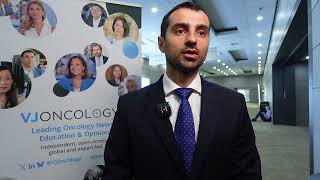
Mattias Johansson, PhD, International Agency for Research on Cancer, Lyon, France, discusses lung cancer risk among people who never smoked (PWNS) across 24 international cohorts. Higher incidence in East/Southeast Asia and lower rates in Europe and Australia were reported, with similar lifetime risks between males and females. This interview took place at 2025 World Conference on Lung Cancer (WCLC) in Barcelona, Spain.
These works are owned by Magdalen Medical Publishing (MMP) and are protected by copyright laws and treaties around the world. All rights are reserved.
Transcript
This study we try to investigate certain questions that are important for lung cancer in people who never smoked. There’s been a lot of work in the past that has suggested that perhaps lung cancer risk is higher in women, that the rates are increasing. So we wanted to take a more sort of comprehensive take on how lung cancer risk varies around the world. So what we’ve done is to look at population cohorts where we have very detailed information on smoking history and other risk factors at baseline...
This study we try to investigate certain questions that are important for lung cancer in people who never smoked. There’s been a lot of work in the past that has suggested that perhaps lung cancer risk is higher in women, that the rates are increasing. So we wanted to take a more sort of comprehensive take on how lung cancer risk varies around the world. So what we’ve done is to look at population cohorts where we have very detailed information on smoking history and other risk factors at baseline. And then we follow these participants for many, many years to see how lung cancer risk varies. And we have about 1.5 million people that we followed, amongst whom about 7,000 were diagnosed with lung cancer in people who never smoked. So the first question we looked at was whether lung cancer risk is higher in Asian populations. And here we saw a very clear answer to that. It was clearly yes. We see about over two-fold higher risk in people from Southeast Asia than we see in the US, and even more so than in Europe. The second question we looked at was whether risk is also higher amongst women than it is amongst men who don’t smoke. And here, in contrast to what most people think, we actually saw a strikingly similar risk between men and women within these specific regions. So the idea that we should go to screen people who are just women, for instance, who never smoke, does not seem to be a really good idea, basically. Finally, we looked at risk, how risk varies, and whether we can identify sort of subpockets of people who never smoke who are at sufficiently high risk to benefit from screening. And here we saw that the vast majority of people who never smoke have really rather low risk of lung cancer. But we can identify certain risk factors that confer quite important risk increases, including family history, history of previous cancer, and of course if you come from Asian countries. And we can see that if we take these factors into account, at higher risk rates, we see people who are at higher risk when they’re sort of getting towards in their 70s if they also have a family history, for instance. But based on our data, we see that perhaps we actually need more and better risk stratification tools to identify people who never smoke for screening.
This transcript is AI-generated. While we strive for accuracy, please verify this copy with the video.
Read more...