The Lung Cancer Channel is supported with funding from Johnson & Johnson (Gold) and Takeda (Gold).
VJOncology is an independent medical education platform. Supporters, including channel supporters, have no influence over the production of content. The levels of sponsorship listed are reflective of the amount of funding given to support the channel.
WCLC 2025 | What role should smoking cessation support have in lung cancer screening?
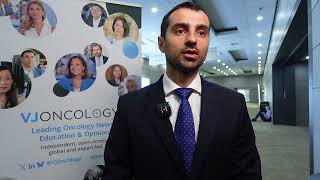
Matthew Callister, PhD, Leeds Teaching Hospitals NHS Trust, Leeds, UK, emphasizes the importance of integrating smoking cessation services with screening programs, citing data from a screening program with built-in cessation support, which showed significant benefits. A substantial proportion of screened individuals are smokers, and providing cessation support alongside screening can lead to improved quit rates. This interview took place at 2025 World Conference on Lung Cancer (WCLC) in Barcelona, Spain.
These works are owned by Magdalen Medical Publishing (MMP) and are protected by copyright laws and treaties around the world. All rights are reserved.
Transcript
I think it’s important to highlight that the data we’ve shown was in the context of a screening program which had built-in smoking cessation. So we had smoke cessation practitioners on our screening teams. I mean other places have shown you can get very good results with them on the phone but the point is there’s a dedicated service linked to the screening program and so you know we would say that the data we’ve published will show the benefit of delivering these two together...
I think it’s important to highlight that the data we’ve shown was in the context of a screening program which had built-in smoking cessation. So we had smoke cessation practitioners on our screening teams. I mean other places have shown you can get very good results with them on the phone but the point is there’s a dedicated service linked to the screening program and so you know we would say that the data we’ve published will show the benefit of delivering these two together. And that’s really what we should be doing. When you have a screening service running, you should have a smoking cessation service running alongside it. About between 30 and 50 percent of people who come for screening will be currently smoking. And we need to help people quit. Most people who smoke want to quit. It’s just they’ve never had the opportunity or the support to do so. And that’s what we need to do.
This transcript is AI-generated. While we strive for accuracy, please verify this copy with the video.
Read more...