The Lung Cancer Channel is supported with funding from Johnson & Johnson (Gold) and Takeda (Gold).
VJOncology is an independent medical education platform. Supporters, including channel supporters, have no influence over the production of content. The levels of sponsorship listed are reflective of the amount of funding given to support the channel.
WCLC 2025 | The future of AI-driven transcriptomic profiling in diagnosing mesothelioma
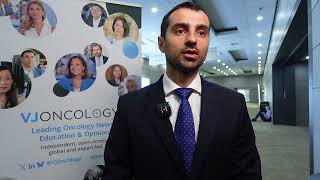
Nicolas Alcala, PhD, International Agency for Research on Cancer, Lyon, France, comments on the potential of artificial intelligence (AI)-driven transcriptomic profiling in clinical workflows. Whilst AI currently is a complement to current diagnostic assays, it holds promise for future advancements. However, significant steps are need to be taken before its implementation, and pathologists will still be essential in the future, and AI will likely augment their work rather than replace it. This interview took place at 2025 World Conference on Lung Cancer (WCLC) in Barcelona, Spain.
These works are owned by Magdalen Medical Publishing (MMP) and are protected by copyright laws and treaties around the world. All rights are reserved.
Transcript
So, there are many steps that need to be done before. I’m very optimistic about how promising it is, but we are just not there. So definitely right now it’s just a complement. In the future, let’s see what AI can do, but I think it will still always be a complement. We will always need pathologists and what they do in any case, in the most extreme case would be needed to train the AI algorithms anyway...
So, there are many steps that need to be done before. I’m very optimistic about how promising it is, but we are just not there. So definitely right now it’s just a complement. In the future, let’s see what AI can do, but I think it will still always be a complement. We will always need pathologists and what they do in any case, in the most extreme case would be needed to train the AI algorithms anyway. But yeah, I think it will be a complement in the future. I hope it will be in the near future but let’s see.
This transcript is AI-generated. While we strive for accuracy, please verify this copy with the video.
Read more...