The Lung Cancer Channel is supported with funding from Johnson & Johnson (Gold).
VJOncology is an independent medical education platform. Supporters, including channel supporters, have no influence over the production of content. The levels of sponsorship listed are reflective of the amount of funding given to support the channel.
WCLC 2025 | Safety and efficacy outcomes of SMART-based SABR in ultracentral NSCLC
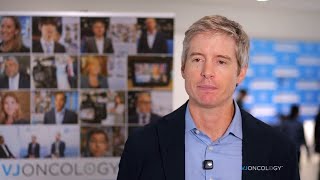
Crispin Hiley, MBChB, PhD, University College London, London, UK, comments on results from a retrospective analysis evaluating stereotactic MR-guided adaptive radiotherapy (SMART) for ultracentral non-small cell lung cancer (NSCLC). SMART enabled daily plan adaptation and real-time tracking, reducing planning target volume size and overlap with critical thoracic structures compared with conventional SABR. Treatment demonstrated favorable local control with no severe toxicity, alongside promising progression-free and overall survival outcomes. This interview took place at 2025 World Conference on Lung Cancer (WCLC) in Barcelona, Spain.
These works are owned by Magdalen Medical Publishing (MMP) and are protected by copyright laws and treaties around the world. All rights are reserved.
Transcript
Yeah, so this is a poster looking at MR-guided treatment of metastatic non-small cell lung cancer in what’s called an ultra-central location. So this is lesions right up against the proximal bronchial tree. And these are some of the hardest lesions to treat with stereotactic radiotherapy. I work with a company called GenesisCare in the UK who have several of these MR-guided radiotherapy platforms to treat these really difficult areas...
Yeah, so this is a poster looking at MR-guided treatment of metastatic non-small cell lung cancer in what’s called an ultra-central location. So this is lesions right up against the proximal bronchial tree. And these are some of the hardest lesions to treat with stereotactic radiotherapy. I work with a company called GenesisCare in the UK who have several of these MR-guided radiotherapy platforms to treat these really difficult areas. And what we found is that you can treat these lesions with really high precision, really good safety, no severe toxicity signals, excellent local control. And I think what we’ve seen from a lot of the presentations at this conference about the management, for example, of EGFR mutation-positive non-smoking-associated lung cancer is that, yes, we have some evolving systemic therapies, but there’s a huge role for local therapies to manage resistance and oligoprogression in patients with non-smoking-associated lung cancer. And MR-guided radiotherapy is an excellent tool for the most difficult-to-treat lesions.
This transcript is AI-generated. While we strive for accuracy, please verify this copy with the video.
Read more...