ESMO 2026 | DESTINY-Breast Respond HER2-low: real-world T-DXd use in Europe
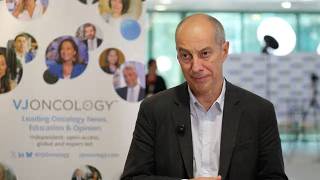
Jean-Yves Pierga, MD, Institut Curie, Paris, France, discusses a second analysis from the DESTINY-Breast Respond HER2-low Europe (NCT05945732) non-interventional study of trastuzumab deruxtecan (T-DXd) in patients with HER2-low metastatic breast cancer after prior chemotherapy. Real-world use spanned a broad population, including older patients, those with brain metastases, and heavily pretreated patients. Among the minority of patients with documented anti-emetic data, use of multiple anti-emetic classes was common, suggesting prophylaxis could be further optimized given the emetogenic risk of trastuzumab deruxtecan. This interview took place at the European Society for Medical Oncology (ESMO) 2026 Congress in Madrid, Spain.
These works are owned by Magdalen Medical Publishing (MMP) and are protected by copyright laws and treaties around the world. All rights are reserved.
Transcript
Yes, so what was presented are the first results of the analysis of a large database which corresponds to a prospective collection of data in the DB response, Destiny DB response, collecting the data about patients with metastatic breast cancer all over different countries in Europe. So it’s the sum of more than 1,000 patients included in this clinical trial and prospective collection of data...
Yes, so what was presented are the first results of the analysis of a large database which corresponds to a prospective collection of data in the DB response, Destiny DB response, collecting the data about patients with metastatic breast cancer all over different countries in Europe. So it’s the sum of more than 1,000 patients included in this clinical trial and prospective collection of data. So what we have seen in this population corresponding to the characteristics of the patient included in the Destiny 04 treatment using Trastuzumab-Deruxtecan in the second line of treatment after one line of chemotherapy in metastatic breast cancer patients. So there was also a population with triple-negative breast cancer, but the majority had hormonal receptor-positive metastatic breast cancer. So what we have seen in this prospective collection of data, it’s the patient in a sort of real-life collection of data, showing that in this trial, patients are quite older than in the DB04, that they are with a poor performance status for some of them. And we have nearly 15% of patients who are older than 75 years old. And we have a patient with brain metastasis, it’s 10% of the population of this clinical trial. And we have a representation of all these patients with ER2-2 plus and ER2-1 plus in this collection. So the poster was reporting the first snapshot analysis on a subpopulation of this trial focusing specifically on the anti-emetic treatment received by this patient in real life. So currently, the recommendation for anti-emetic treatment for using trastuzumab, deruxtecan in this population is to use a high level of anti-emetic and at least three drugs, a combination of three drugs for prevention of emesis in this population and so what was reported in the poster it’s that quite a significant lower proportion of patients receive this triple treatment and there was the majority receiving only one or two drugs to prevent emesis. So that was the first signal of what was done in real life for this patient and it was, I would say, the first demonstration that you can collect a lot of important information with this kind of prospective collection of data in real life for patients treated in a specific indication corresponding to a randomized trial which was previously published.
This transcript is AI-generated. While we strive for accuracy, please verify this copy with the video.
Read more...