The Lung Cancer Channel is supported with funding from Johnson & Johnson (Gold).
VJOncology is an independent medical education platform. Supporters, including channel supporters, have no influence over the production of content. The levels of sponsorship listed are reflective of the amount of funding given to support the channel.
ASCO 2025 | How can we improve access to lung cancer molecular testing in Brazil?
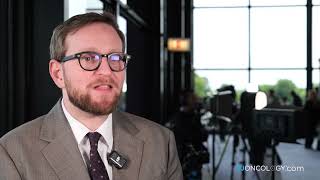
Marcelo Corassa, MD, A.C. Camargo Cancer Center, São Paulo, Brazil, comments on the challenges of molecular testing for lung cancer in Brazil, where access to insurance coverage is limited, leading to a reliance on industry-sponsored programs. Both doctors and patients need to be educated about the need for molecular testing, particularly for patients with high-risk or high-predictability of molecular alterations. Broad testing, including next-generation sequencing (NGS), is additionally necessary to accurately detect mutations. This interview took place during the 2025 American Society of Clinical Oncology (ASCO) Meeting in Chicago, IL.
These works are owned by Magdalen Medical Publishing (MMP) and are protected by copyright laws and treaties around the world. All rights are reserved.
Transcript
In Brazil, we have, well I’m from Brazil, I have a lot of difficulty getting molecular testing because it’s not covered by insurance. So we have some industry-sponsored programs, we actually rely on them because many patients don’t have, they have insurance but they don’t have the money to pay for molecular tests, they’re very expensive in Brazil. Well, you have access to it, but since there’s access, and I know here, for instance in the US you have access via insurance...
In Brazil, we have, well I’m from Brazil, I have a lot of difficulty getting molecular testing because it’s not covered by insurance. So we have some industry-sponsored programs, we actually rely on them because many patients don’t have, they have insurance but they don’t have the money to pay for molecular tests, they’re very expensive in Brazil. Well, you have access to it, but since there’s access, and I know here, for instance in the US you have access via insurance. I just talk about education. You need to educate the doctors of course but I always say that we need to educate our patients as well because information is always around the globe, it’s just in the palm of your hand. So the patient that has lung cancer needs to understand that they need a test because many oncologists, well we have to practice with like 10, 12, 15 different diseases and sometimes it’s hard for you to remember that you have to test everyone. So, long story short, I think medical education, of course, to understand that patients, especially if you have a patient with a high risk, a high predictability of having a molecular alteration, this patient needs a test. And if the doctors don’t do it, we have to educate patients and they have to ask for it, hey doctor, are you not going to test me? And of course, we need broad testing. When we talk about these two alterations, EGFR-X1 insertions, especially PCR is not a very good test for it. NGS must be performed. You can lose up to 50% of EGFR-X1 insertions by PCR. So we need broad testing. You can make, you can do liquid biopsies, you can do tissue biopsies, but we need broad testing for patients to be receiving these options. And like I said, we have first-line trials. So if you just give chemotherapy to our patient, they are going to become ineligible for your trial. So it’s education, basically.
This transcript is AI-generated. While we strive for accuracy, please verify this copy with the video.
Read more...
Disclosures
Employment – No Relationships to Disclose
Leadership – No Relationships to Disclose
Stock and Other Ownership Interests – No Relationships to Disclose
Honoraria – Amgen; AstraZeneca; Bristol-Myers Squibb Brazil; Janssen; Lilly; MSD; Novartis; Pfizer; Sanofi/Regeneron; Takeda
Consulting or Advisory Role – AstraZeneca; Bristol-Myers Squibb; Takeda
Speakers’ Bureau – AstraZeneca; Bristol-Myers Squibb; Janssen; MSD; Takeda
Research Funding – No Relationships to Disclose
Patents, Royalties, Other Intellectual Property – No Relationships to Disclose
Expert Testimony – No Relationships to Disclose
Travel, Accommodations, Expenses – MSD