The Lung Cancer Channel is supported with funding from Johnson & Johnson (Gold).
VJOncology is an independent medical education platform. Supporters, including channel supporters, have no influence over the production of content. The levels of sponsorship listed are reflective of the amount of funding given to support the channel.
WCLC 2025 | The importance of integrating smoking cessation in lung cancer screening
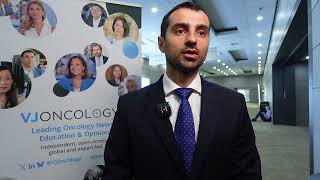
Miroslav Samaržija, MD, PhD, University Hospital Centre Zagreb, Zagreb, Croatia, emphasizes the importance of a mandatory smoking cessation program as a part of the lung cancer screening program to prevent problems between smokers and non-smokers. Lung cancer screening is more effective when combined with smoking cessation, and further scientific research is needed to implement artificial intelligence (AI) solutions to analyze large datasets. This interview took place at 2025 World Conference on Lung Cancer (WCLC) in Barcelona, Spain.
These works are owned by Magdalen Medical Publishing (MMP) and are protected by copyright laws and treaties around the world. All rights are reserved.
Transcript
Smoking cessation program is a mandatory part of the lung cancer screening program. Otherwise, we will have a lot of problems and a lot of mess between smokers and non-smokers among colleagues and in the general public. That was the first covered topic to include. And we now know that lung cancer screening works better if you have a smoking cessation program as a part of that...
Smoking cessation program is a mandatory part of the lung cancer screening program. Otherwise, we will have a lot of problems and a lot of mess between smokers and non-smokers among colleagues and in the general public. That was the first covered topic to include. And we now know that lung cancer screening works better if you have a smoking cessation program as a part of that. The next step will be a lot of scientific work. The reason for that is when you have a huge number of participants. It is not possible to make all proper analyses and all additional analyses without early implementation of different AI solutions. When we translate that into creation plans, at this moment we are working very hard on two very fancy topics. The first one is extension of screening from lung cancer to other diseases which can be diagnosed with the same low-dose CT scan. And the second part is validation of SIBYL. SIBYL is a machine learning prediction model developed at MIT, Boston, and we are pretty sure that based on the SIBL, it will be possible to make the prediction of development of lung cancer and based on that better tailoring or personal tailoring of follow-up scans. Those two topics are at this moment the most important for us.
This transcript is AI-generated. While we strive for accuracy, please verify this copy with the video.
Read more...