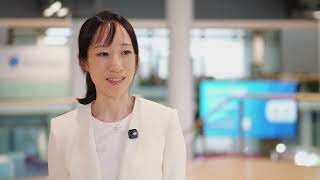
Yeah, so like always, we have more challenges than solutions. Uh, one of the big challenges is to train these models and to build large multimodal datasets because in current practice, different modalities like radiology, histology, genomics, electronic records, they are handled by different departments and it’s really hard to put it all together because you have to handle multiple stakeholders...
Yeah, so like always, we have more challenges than solutions. Uh, one of the big challenges is to train these models and to build large multimodal datasets because in current practice, different modalities like radiology, histology, genomics, electronic records, they are handled by different departments and it’s really hard to put it all together because you have to handle multiple stakeholders. But also, different centers do different tests, different assays; they have different time orders of the events, how they do the diagnosis. So it’s very hard to have these datasets where you have complete information for all the patients. So we have, in practice, we have a lot of missing and incomplete data. When we speak about multimodal data integration, which is a big challenge, and we need approaches that can overcome it and it can be like robust. It cannot be that if your patient is missing one mutation and your model needs a mutation, you cannot make any predictions. So missing and incomplete data, it’s one big question. That is, how and when additional modalities improve the model performance and whatnot. And another point is if multimodal data fusion can actually increase the disparities between the patients. Because if you can have a model that makes better predictions, but it requires expensive tests that we may not have for all the patients, this can have a negative impact on equity and how we approach the patients. Because if you can have a model that makes better predictions, but it requires expensive tests that we may not have for all the patients, this can have a negative impact on equity and how we approach the patients and healthcare. It’s a lot of tools to resolve.
This transcript is AI-generated. While we strive for accuracy, please verify this copy with the video.