The Lung Cancer Channel is supported with funding from Johnson & Johnson (Gold) and Takeda (Gold).
VJOncology is an independent medical education platform. Supporters, including channel supporters, have no influence over the production of content. The levels of sponsorship listed are reflective of the amount of funding given to support the channel.
BTOG 2026 | CONVERGE: NBTXR3, chemoradiotherapy, and durvalumab in lung cancer
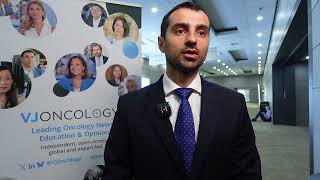
Ricky Thakrar, MBBS, MRCP, PhD, University College London, London, UK, discusses the CONVERGE trial (NCT06667908) of NBTXR3, an injected nanoparticle built around hafnium oxide in combination with standard chemoradiotherapy and durvalumab in patients with stage 3 unresectable non-small cell lung cancer (NSCLC). Trial aims to assess whether this novel approach can improve progression-free survival by enhancing the synergistic effect of radiotherapy treatments. This interview took place at the 2026 British Thoracic Oncology Group (BTOG) congress in Edinburgh, UK.
These works are owned by Magdalen Medical Publishing (MMP) and are protected by copyright laws and treaties around the world. All rights are reserved.
Transcript
So the CONVERGE trial is a trial that we have run that we just opened at University College London Hospital. It will be a trial using our robotic platform and EBUS in patients who have stage 3 lung cancer. We’ll be looking at patients who are not for resection but for chemoradiotherapy with radical intent followed by durvalumab and we’ll be randomising patients to having standard of care or having injection of a nanoparticle that is built around hafnium oxide...
So the CONVERGE trial is a trial that we have run that we just opened at University College London Hospital. It will be a trial using our robotic platform and EBUS in patients who have stage 3 lung cancer. We’ll be looking at patients who are not for resection but for chemoradiotherapy with radical intent followed by durvalumab and we’ll be randomising patients to having standard of care or having injection of a nanoparticle that is built around hafnium oxide. So hafnium oxide is a nanoparticle that draws in gamma radiation into cells and potentially has a synergistic effect with the radiotherapy treatments other patients will have. We’ll be looking at progression-free survival and hopefully what we’ll see is that by injecting the tumour and the lymph nodes with this compound, we may improve the response they get to their lung cancer treatment.
This transcript is AI-generated. While we strive for accuracy, please verify this copy with the video.
Read more...