ASCO 2025 | The future of immunotherapy and AI approaches in glioblastoma
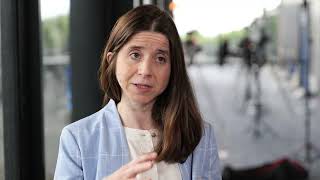
Reena Thomas, MD, PhD, Stanford University, Stanford, CA, gives an overview of the current advances in glioblastoma (GBM) treatment, highlighting the potential of vaccine-based therapies, stem cell-delivered immune-modulating agents, and combinatorial approaches that combine immune-based therapies with targeted therapies. Prof. Thomas emphasizes the importance of identifying early responders to therapy and using artificial intelligence (AI) and other technologies to synthesize data and enable personalized treatment approaches. This interview took place during the 2025 American Society of Clinical Oncology (ASCO) Meeting in Chicago, IL.
These works are owned by Magdalen Medical Publishing (MMP) and are protected by copyright laws and treaties around the world. All rights are reserved.
Transcript
There are many other advances that are taking place in real time. You know, we’re better understanding how vaccine-based therapies, there are stem cell-delivered immune-modulating agents. We’re better understanding the radiation’s therapeutic effect and how that can be synergistic with immune therapies in terms of release of tumor antigens and engagement by immune-based therapies...
There are many other advances that are taking place in real time. You know, we’re better understanding how vaccine-based therapies, there are stem cell-delivered immune-modulating agents. We’re better understanding the radiation’s therapeutic effect and how that can be synergistic with immune therapies in terms of release of tumor antigens and engagement by immune-based therapies. Again, you know, the checkpoint inhibitor experience thus far has not panned out to be successful, but we are hoping to see whether in the neoadjuvant setting, so kind of priming the immune system to be active and in anticipation of a surgical resection is another approach that is being taken. And I would say lastly, it’s the combinatorial approach, you know, that in the upfront setting, providing immune-based therapies followed in conjunction with other targeted therapies that might also be immune-based in the recurrent setting. I think that’s where we have the most potential to impact all patients. And actually, I would say the third and maybe last point that I wanted to share was we are gleaning a much better understanding of who are the early responders to therapy and who might, which patients might be, you know, showing signs of tumor progression early on. And that pivot point, you know, so basically the timing between determination of that a treatment has worked or that it is time to actually move forward with the next approach is something that we are very hopeful that the, you know, power of AI and other technologies that can synthesize the data in this precision approach is also, you know, that it’s independent of one singular, you know, approach of a specific type of therapy, but rather that approach of better understanding in real time what signatures might be present to enable clinicians to manage and treat each individual GBM patient in the most optimal way.
This transcript is AI-generated. While we strive for accuracy, please verify this copy with the video.
Read more...