The Lung Cancer Channel is supported with funding from Johnson & Johnson (Gold) and Takeda (Gold).
VJOncology is an independent medical education platform. Supporters, including channel supporters, have no influence over the production of content. The levels of sponsorship listed are reflective of the amount of funding given to support the channel.
WCLC 2025 | Can AI replace radiologists in lung cancer screening programs?
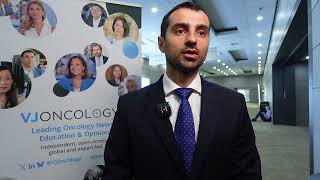
Rozemarijn Vliegenthart, MD, PhD, University Medical Center Groningen, Groningen, Netherlands, notes that while artificial intelligence (AI) plays a significant role in analyzing CT scans, particularly in detecting lung nodules and quantifying characteristics, there is still a need for radiologists to review the scans, especially on low-dose chest CTs, which can produce a wide range of abnormalities. AI software is not yet capable of detecting all possible findings, and therefore, radiologists will continue to be essential in evaluating CT scans. This interview took place at 2025 World Conference on Lung Cancer (WCLC) in Barcelona, Spain.
These works are owned by Magdalen Medical Publishing (MMP) and are protected by copyright laws and treaties around the world. All rights are reserved.
Transcript
Well, I do particularly see a role for AI because it’s less dependent on the CT scan made than radiomics. At this moment we use AI to detect lung nodules, to quantify the size and to get some characteristics of a lung nodule. But we also now have software that quantifies coronary calcium or the amount of pulmonary emphysema. And that helps because that means that the radiologist doesn’t have to evaluate these findings, but can just check the AI results...
Well, I do particularly see a role for AI because it’s less dependent on the CT scan made than radiomics. At this moment we use AI to detect lung nodules, to quantify the size and to get some characteristics of a lung nodule. But we also now have software that quantifies coronary calcium or the amount of pulmonary emphysema. And that helps because that means that the radiologist doesn’t have to evaluate these findings, but can just check the AI results. What you have to be aware is that on a low-dose chest CT, there can be all kinds of abnormalities, basically from the thyroid to the kidneys, which means that it’s difficult to get an AI software that can detect all the possible findings. So there will always be, for the foreseeable future, a need for a radiologist to review the scan.
This transcript is AI-generated. While we strive for accuracy, please verify this copy with the video.
Read more...