The Lung Cancer Channel is supported with funding from Johnson & Johnson (Gold) and Takeda (Gold).
VJOncology is an independent medical education platform. Supporters, including channel supporters, have no influence over the production of content. The levels of sponsorship listed are reflective of the amount of funding given to support the channel.
WCLC 2025 | Enhancing benefit from incidental findings in lung cancer screening
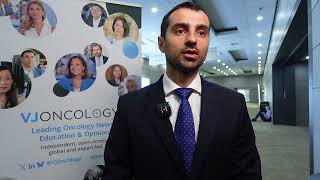
Rozemarijn Vliegenthart, MD, PhD, University Medical Center Groningen, Groningen, Netherlands, comments on the challenges of managing incidental findings in lung cancer screening, highlighting the need to strike a balance between minimizing unnecessary testing and maximizing the potential benefits of screening. Radiologists must be guided on how to approach these findings to prevent over-testing and optimize the cost-effectiveness of screening. This interview took place at 2025 World Conference on Lung Cancer (WCLC) in Barcelona, Spain.
These works are owned by Magdalen Medical Publishing (MMP) and are protected by copyright laws and treaties around the world. All rights are reserved.
Transcript
So now that more lung cancer screening programs are starting across the globe, there are new issues arising that we have to address and one of them is what to do with incidental findings. So actually findings on a chest CT for which the CT was not really made, but that a radiologist may incidentally find when he is looking at the CT scan. So we do the scan primarily to find lung nodules, which may be lung cancer, but you can also find other things sometimes like a small abnormality in the kidney, or you can find coronary calcium, or you can find emphysema...
So now that more lung cancer screening programs are starting across the globe, there are new issues arising that we have to address and one of them is what to do with incidental findings. So actually findings on a chest CT for which the CT was not really made, but that a radiologist may incidentally find when he is looking at the CT scan. So we do the scan primarily to find lung nodules, which may be lung cancer, but you can also find other things sometimes like a small abnormality in the kidney, or you can find coronary calcium, or you can find emphysema. And we need guidance on what to do with these findings because we want to prevent, on the one hand, that we do way too much diagnostic testing in individuals that turn out to have no significant incidental finding and on the other hand, there could be potential to find more on the same scan that improves the cost-effectiveness of screening. So that’s the balance where we have to move in between.
This transcript is AI-generated. While we strive for accuracy, please verify this copy with the video.
Read more...