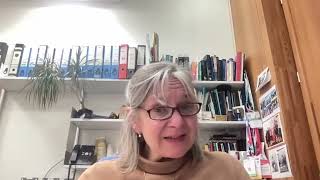
Yes, so I’m Anita Grigoriadis. I’m a professor in molecular and digital pathology at King’s College London. And my talk about AI literacy for oncologists really focused on broad themes to capture the data, the models and the governance structure. So how can we provide education to our clinicians, but to all our stakeholders, you know, in the healthcare system that helped them to feel more comfortable, you know, that AI, you know, may not be a black box, that their data is safe, and the data and the AI models are not biased...
Yes, so I’m Anita Grigoriadis. I’m a professor in molecular and digital pathology at King’s College London. And my talk about AI literacy for oncologists really focused on broad themes to capture the data, the models and the governance structure. So how can we provide education to our clinicians, but to all our stakeholders, you know, in the healthcare system that helped them to feel more comfortable, you know, that AI, you know, may not be a black box, that their data is safe, and the data and the AI models are not biased. Yeah, so one strategy could be potentially, you know, to hire an algorithmic consultant that is the middleman between, you know, our clinicians and those that build these algorithms. So somebody such as a pharmacist, for example, you know, that would be able to, you know, advise what AI tools could be used and, you know, and then work with the clinicians on the use of these AI tools and interpret these results. Equally well, you know, this algorithmic consultant, you know, and this was a deal that was published by Mama Habib recently, is that this algorithmic consultant could also be, you know, a new workforce in a hospital that looks out for different AI tools and vets for them, assesses them, then employs these tools in the clinic and then ensures that the tools are working consistently as they should do.
This transcript is AI-generated. While we strive for accuracy, please verify this copy with the video.