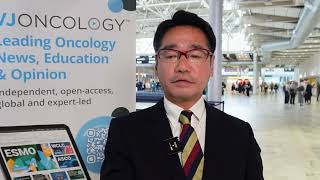
ASCO 2025 | The future of immunotherapy in nasopharyngeal carcinoma beyond PD-1
Jun Ma, MD, Sun Yat-sen University Cancer Center, Guangzhou, China, discusses current immunotherapy approaches in nasopharyngeal carcinoma. There is a growing interest in targeting newer immune checkpoints like TIGIT and TIM-3, as well as bispecific antibodies. These emerging strategies show promising early results in clinical trials, especially for patients who have progressed on standard PD-1 blockade. This interview took place during the 2025 American Society of Clinical Oncology (ASCO) Meeting in Chicago, IL.
These works are owned by Magdalen Medical Publishing (MMP) and are protected by copyright laws and treaties around the world. All rights are reserved.
Transcript
Currently, the most commonly explored immunotherapy approaches in NPC involve the immune checkpoint inhibitors. This includes PD-1 and PD-L1 inhibitors, CTLA-4 inhibitors, as well as dual-target antibodies that block both PD-1 and CTLA-4. There is also growing interest in the targeting of newer immune checkpoints like LAG-3 and TIM-3. In addition, some investigational therapies are combining immune checkpoint blocks with anti-androgenetic strategies...
Currently, the most commonly explored immunotherapy approaches in NPC involve the immune checkpoint inhibitors. This includes PD-1 and PD-L1 inhibitors, CTLA-4 inhibitors, as well as dual-target antibodies that block both PD-1 and CTLA-4. There is also growing interest in the targeting of newer immune checkpoints like LAG-3 and TIM-3. In addition, some investigational therapies are combining immune checkpoint blocks with anti-androgenetic strategies. For example, bispecific antibodies that target both PD-1 and VEGF. For patients with recurrent or metastatic NPC who have progressed on standard PD-1 blockade, antibody-drug conjugates targeting PD-L1 have shown encouraging early results in clinical trials. These emerging strategies are expected to expand the therapeutic landscape for NPC in coming years.
This transcript is AI-generated. While we strive for accuracy, please verify this copy with the video.
Read more...

Disclosures
Research Funding – Bristol Myers Squibb Foundation; Varian Medical Systems