The Lung Cancer Channel is supported with funding from Johnson & Johnson (Gold) and Takeda (Gold).
VJOncology is an independent medical education platform. Supporters, including channel supporters, have no influence over the production of content. The levels of sponsorship listed are reflective of the amount of funding given to support the channel.
WCLC 2025 | Integrating incidental findings into lung cancer screening programs
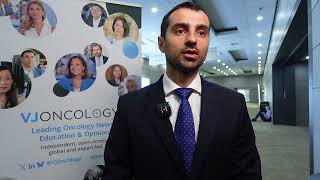
Rozemarijn Vliegenthart, MD, PhD, University Medical Center Groningen, Groningen, Netherlands, emphasizes the importance of clear communication of incidental findings in radiology. Incidental findings should be part of the initial screening and evaluation of the initial scan, and radiologists should provide clear recommendations and advice on what to do with the findings. This ensures that the benefit of the incidental finding is not lost. This interview took place at 2025 World Conference on Lung Cancer (WCLC) in Barcelona, Spain.
These works are owned by Magdalen Medical Publishing (MMP) and are protected by copyright laws and treaties around the world. All rights are reserved.
Transcript
That really depends per country how incidental findings are integrated, but usually they’re part of the initial screening and the evaluation of the initial scan. Then the radiologist has to write down the findings with, if it’s clinically significant, a recommendation. So it’s really important that the radiologist is very clear in what he or she has found...
That really depends per country how incidental findings are integrated, but usually they’re part of the initial screening and the evaluation of the initial scan. Then the radiologist has to write down the findings with, if it’s clinically significant, a recommendation. So it’s really important that the radiologist is very clear in what he or she has found. And if it has to be referred to a GP or a patient, also give clear advice on what to do with the finding. Because otherwise the benefit will probably be lost.
This transcript is AI-generated. While we strive for accuracy, please verify this copy with the video.
Read more...