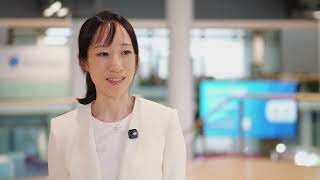
ESMO Immuno-Oncology 2025 | Off-the-shelf cancer vaccines targeting tumor microenvironment antigens
Mads Andersen, DMSc, PhD, National Center for Cancer Immune Therapy, Herlev, Denmark, highlights the potential of cancer vaccines, commenting on the challenges of patient-specific antigens. The advantage of targeting tumor-associated environment antigens and neoantigens to design off-the-shelf vaccines is that off-the-shelf vaccines are easier to manufacture and control. This interview took place at 2025 European Society for Medical Oncology (ESMO) Immuno-Oncology Congress in London, UK.
These works are owned by Magdalen Medical Publishing (MMP) and are protected by copyright laws and treaties around the world. All rights are reserved.
Transcript
A very, very interesting question. And of course, it depends on the technology you’re using and the target you’re using. If you’re thinking of traditional or not traditional, but the main focus of cancer vaccines is patient-specific antigens. And there’s, of course, a lot of problems because you have to tailor your vaccine for every individual patient...
A very, very interesting question. And of course, it depends on the technology you’re using and the target you’re using. If you’re thinking of traditional or not traditional, but the main focus of cancer vaccines is patient-specific antigens. And there’s, of course, a lot of problems because you have to tailor your vaccine for every individual patient. And that would be a lot of regulatory issues with that. And actually, to be honest, I’m not 100% sure how you can even solve that. But if you’re targeting tumor-associated environment antigens and even neoantigens, you can design off-the-shelf vaccines, which is much more easy to manufacture, much more easy to control. And therefore, I think that’s also a very, very interesting issue with these vaccines, that they are off-the-shelf and therefore much more easier. And already we have the phase three data. So I think definitely that is a way forward.
This transcript is AI-generated. While we strive for accuracy, please verify this copy with the video.
Read more...