ASCO 2026 | Optimizing sequencing & maintenance strategies in HER2+ metastatic breast cancer
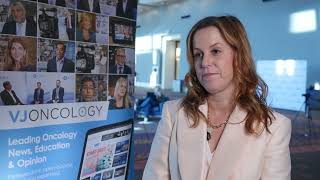
Erika Hamilton, MD, Sarah Cannon Research Institute, Nashville, TN, comments on novel treatment sequencing in HER2-positive metastatic breast cancer, and notes that patients are interested in maintenance regimens to improve quality of life and avoid cytotoxic therapy. Data from the DESTINY-Breast09 (NCT04784715), PATINA (NCT02947685), and CLEOPATRA (NCT00567190) trials have demonstrated multiple possible treatment options for these patients. Treating until maximal response is important, rather than stopping after a fixed number of cycles, and maintenance strategies may be considered after a patient has received the best response they can achieve. This interview took place during the 2026 American Society of Clinical Oncology (ASCO) Meeting in Chicago, IL.
These works are owned by Magdalen Medical Publishing (MMP) and are protected by copyright laws and treaties around the world. All rights are reserved.
Transcript
Yeah, absolutely. So we’ve also seen data from DESTINY-Breast09 that really showed the emergence of T-DM1 plus pertuzumab as another option in first line. That trial did not allow for any maintenance regimen. So patients really received T-DM1 and pertuzumab until progression. But as often happens in breast cancer, our pace of progress is brisk. And so a lot of times we have to make decisions with the absence of true data...
Yeah, absolutely. So we’ve also seen data from DESTINY-Breast09 that really showed the emergence of T-DM1 plus pertuzumab as another option in first line. That trial did not allow for any maintenance regimen. So patients really received T-DM1 and pertuzumab until progression. But as often happens in breast cancer, our pace of progress is brisk. And so a lot of times we have to make decisions with the absence of true data. So I think that patients are really telling us that they are very interested in maintenance regimens, the ability to really have great quality of life, to not have to be on a cytotoxic therapy. I think there’s going to be a big appetite to use maintenance regimens, even though that wasn’t formally tested in Destiny Breast 09. We also have seen data from PHEREXA, also known as PATINA, looking at the addition of palbociclib in a maintenance regimen, and also data from the HER2-CLIMB-05 trial, two different options in the maintenance setting, also known as the PATINA trial and the HER2-CLIMB-05 trial. And then, yes, we have CLEOPATRA, induction with TCHP, as well as Destiny Breast 09 with T-DM1 and pertuzumab. I think one story that’s really emerging is that for Destiny Breast 09, it may be quite important to make sure that we don’t just stop after a fixed number of cycles of trastuzumab, deruxtecan. It’s probably going to be pretty important that we treat until maximal response. There was some emerging data at ASCO about a so-called deep partial response or a deep PR subgroup of patients. Those patients had outcomes really that were just as good as complete response patients. So to kind of say, you know, treat to six cycles and just stop might not be doing our patients any favors if they’re one of those patients that really could have a quite deep response. It takes longer for patients to have deep responses. And so I think many of us are saying we’re really going to treat until a patient has received the best response they can receive. And it looks like that might take 11, 13 months, et cetera. And then think about whether a maintenance strategy might be right for that individual patient.
This transcript is AI-generated. While we strive for accuracy, please verify this copy with the video.
Read more...