The Lung Cancer Channel is supported with funding from Johnson & Johnson (Gold) and Takeda (Gold).
VJOncology is an independent medical education platform. Supporters, including channel supporters, have no influence over the production of content. The levels of sponsorship listed are reflective of the amount of funding given to support the channel.
WCLC 2025 | Treating patients with unresectable NSCLC ineligible for chemo-RT
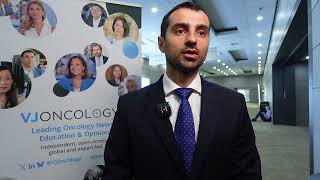
Andrea Filippi, MD, Fondazione IRCCS Istituto Nazionale dei Tumori, Milan, Italy, comments on the need for novel approaches in patients with unresectable non-small cell lung cancer (NSCLC) who are unfit for concurrent chemoradiotherapy. The addition of immunotherapy may be a more effective option, especially for PD-L1 positive cases, and a combination of low-dose chemotherapy and radiation therapy can additionally minimize toxicity and improve quality of life. This interview took place at 2025 World Conference on Lung Cancer (WCLC) in Barcelona, Spain.
These works are owned by Magdalen Medical Publishing (MMP) and are protected by copyright laws and treaties around the world. All rights are reserved.
Transcript
We have many patients that at the end, for a variety of reasons, cannot be addressed to the standard of care, the most aggressive combination of chemo and radiation. So traditionally we had only one option, especially if they are not a candidate for chemo, it was radiation alone. But with radiation alone the problem is that it’s very tolerable, it’s safe, but the overall survival, median overall survival is around 10 months...
We have many patients that at the end, for a variety of reasons, cannot be addressed to the standard of care, the most aggressive combination of chemo and radiation. So traditionally we had only one option, especially if they are not a candidate for chemo, it was radiation alone. But with radiation alone the problem is that it’s very tolerable, it’s safe, but the overall survival, median overall survival is around 10 months. So it’s very poor and we wanted to offer something more and we want to offer something more in these days but we cannot intensify treatment with traditional drugs so our logical choice is to add immunotherapy because it’s better, especially for patients who have biomarkers such as PD-L1 positive cancers or in any case do low-dose chemotherapy and maybe also low-dose radiation therapy very precisely targeting the tumor and following the patients at our best with also our colleagues from the pulmonology department etc to minimize toxicity because quality of life is very important for this kind of patient it’s important for all but for sure for this patient population is crucial
This transcript is AI-generated. While we strive for accuracy, please verify this copy with the video.
Read more...