The Lung Cancer Channel is supported with funding from Johnson & Johnson (Gold) and Takeda (Gold).
VJOncology is an independent medical education platform. Supporters, including channel supporters, have no influence over the production of content. The levels of sponsorship listed are reflective of the amount of funding given to support the channel.
WCLC 2025 | DEDALUS: safety of sequential chemo-IO, HFRT, and durvalumab in NSCLC
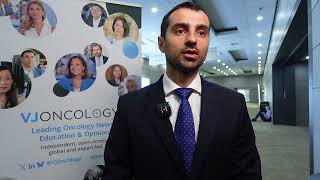
Andrea Filippi, MD, Fondazione IRCCS Istituto Nazionale dei Tumori, Milan, Italy, discusses final safety results from the Phase II DEDALUS trial (NCT05128630) of sequential chemo-immunotherapy, hypofractionated radiotherapy (HFRT), and durvalumab consolidation in patients with unresectable stage III non-small cell lung cancer (NSCLC) unsuitable for concurrent chemoradiotherapy. The study demonstrated acceptable tolerability, with a manageable incidence of grade 3–4 treatment-related events, largely linked to chemotherapy. These findings support the feasibility of this de-intensified approach as an alternative for patients unable to undergo standard concurrent regimens. This interview took place at 2025 World Conference on Lung Cancer (WCLC) in Barcelona, Spain.
These works are owned by Magdalen Medical Publishing (MMP) and are protected by copyright laws and treaties around the world. All rights are reserved.
Transcript
Yeah, the data was again addressing questions we have when we treat patients who are unfit for concurrent chemoradiation but they are candidates for a sequential approach. But the sequential approach is not so efficient in controlling the primary tumor but also micrometastases. So we wanted to potentiate a little bit this approach while keeping the toxicity at the minimum and not adding too much toxic effect...
Yeah, the data was again addressing questions we have when we treat patients who are unfit for concurrent chemoradiation but they are candidates for a sequential approach. But the sequential approach is not so efficient in controlling the primary tumor but also micrometastases. So we wanted to potentiate a little bit this approach while keeping the toxicity at the minimum and not adding too much toxic effect. So we do three cycles of chemoimmunotherapy before radiation, then radiation without chemo, just plus immuno and then maintenance. We recruited in this phase two single-arm trial 25 patients. The safety was very good, the primary endpoint was possibly related to adverse events. We didn’t record any grade 5 events and the grade 3 events were less than 25%, which is acceptable in this disease. And in patients who completed the program, the survival data are very promising, even if the sample size is small. And most of the reasons for not completing the program is chemotherapy-related to CMT. So it’s not related to radiation or immunotherapy, which is something not surprising because chemotherapy in these patients has still a lot of side effects. So I think that we can be satisfied that we are opening a new window that for sure needs to be, let’s say, explored further in a larger sample size. But we are opening our way.
This transcript is AI-generated. While we strive for accuracy, please verify this copy with the video.
Read more...