ESMO Immuno-Oncology 2025 | Spatial T-cell communities and their impact on immunotherapy response
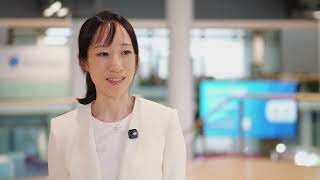
Abhishek Garg, PhD, KU Leuven, Leuven, Belgium, discusses the importance of spatial community structures in understanding tumor behavior and metastasis, with a focus on T-cells as a key target for immunotherapy. Prof. Garg highlights the need to move beyond the concept of T-cell exhaustion and explore other factors, such as the role of checkpoint molecules, and emphasizes the value of spatial analysis in revealing the diversity of T-cell states and their impact on patient response to immunotherapy. This interview took place at 2025 European Society for Medical Oncology (ESMO) Immuno-Oncology Congress in London, UK.
These works are owned by Magdalen Medical Publishing (MMP) and are protected by copyright laws and treaties around the world. All rights are reserved.
Transcript
So, yeah, I plan to discuss the complexity of how the spatial community structures are important for how tumors behave, but also how metastasis behaves. So the focus will be T-cells, which is one of the main targets for immunotherapy. But our lab kind of champions the view that we cannot just view T-cells as exhausted because that as a concept has not outlived the PD-1, PD-L1 paradigm...
So, yeah, I plan to discuss the complexity of how the spatial community structures are important for how tumors behave, but also how metastasis behaves. So the focus will be T-cells, which is one of the main targets for immunotherapy. But our lab kind of champions the view that we cannot just view T-cells as exhausted because that as a concept has not outlived the PD-1, PD-L1 paradigm. Beyond that, immunotherapy is trying to target the exhaustion like DIGIT is not a relevant term in this context and should be replaced with other checkpoint molecules such as LAG3, TIM3 have not really worked out as well. So we need to start moving away essentially from exhaustion. And we see that this is something which comes out quite well in spatial analysis, because when you are analyzing the cells in their community structures, that they actually start behaving more in tune with how the environment is communicating with them. And then you start realizing that they exist in many diversities of states. And this ultimately has major impact for how patients respond to immunotherapy, especially if the T cells are dying. Then this is not so easy to detect in single cell data or other kind of data because you mostly exclude these cells during quality control. So you don’t appreciate how much of this stress might be there on these important compartments in the tumor. Because the spatial context keeps their cellular architecture intact, you actually can appreciate these issues. So this is going to be one of the main focuses of my talk there, this community structure and how to appreciate the real barriers to immunotherapy in patients.
This transcript is AI-generated. While we strive for accuracy, please verify this copy with the video.
Read more...