The Lung Cancer Channel is supported with funding from Johnson & Johnson (Gold).
VJOncology is an independent medical education platform. Supporters, including channel supporters, have no influence over the production of content. The levels of sponsorship listed are reflective of the amount of funding given to support the channel.
ASCO 2024 | The ABCs of ADCs: what does the future hold?
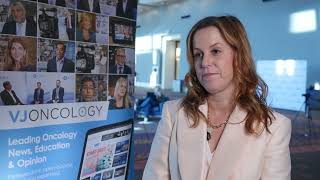
Erika Hamilton, MD, Sarah Cannon Research Institute, Nashville, TN, delves into the future of antibody drug conjugates (ADCs) in oncology, encompasses insights from various disease types, including myeloma, lung cancer, and breast cancer. Dr Hamilton highlights the evolution of ADCs over the past two decades, emphasizing their expansion beyond highly expressing targets to include antigens with lower expression levels. She discusses the promising development of ADCs targeting novel antigens, such as TROP-2, and explores innovative strategies like payload masking and bispecific targeting to overcome resistance and enhance tolerability. Dr Hamilton envisions ADCs revolutionizing oncology care and underscores the importance of understanding antigen expression and optimizing drug sequencing in future research and clinical practice. This interview took place during the 2024 American Society of Clinical Oncology (ASCO) Meeting in Chicago, IL.
These works are owned by Magdalen Medical Publishing (MMP) and are protected by copyright laws and treaties around the world. All rights are reserved.


Disclosures
Consulting or Advisory Role – Accutar Biotechnology; AstraZeneca; Daiichi Sankyo; Ellipses Pharma; Entos; Fosun Pharma; Genentech/Roche; Gilead Sciences; Jazz Pharmaceuticals; Jefferies; Lilly; Medical Pharma Services; Mersana; Novartis; Olema Pharmaceuticals; Pfizer; Stemline Therapeutics; Tempus; Theratechnologies; Tubulis GmbH; Verascity Science; Zentalis
Research Funding – Abbvie; Accutar Biotech; Acerta Pharma; ADC Therapeutics; Akeso Biopharma; Amgen; Aravive; ArQule; Artios; Arvinas; AstraZeneca; AtlasMedx; BeiGene; Black Diamond Therapeutics; Bliss Biopharmaceutical; Boehringer Ingelheim; Bristol-Myers Squib; Cascadian Therapeutics; Clovis Oncology; Compugen; Context Therapeutics; Cullinan Oncology; Curis; CytomX Therapeutics; Daiichi Sankyo; Dana Farber Cancer Hospital; Dantari; Deciphera; Duality Biologics; eFFECTOR Therapeutics; Eisai; Ellipses Pharma; Elucida Oncology; EMD Serono; Fochon Pharmaceuticals; Fujifilm; G1 Therapeutics; Genentech/Roche; Gilead Sciences; H3 Biomedicine; Harpoon; Hutchison MediPharma; Immunogen; Immunomedics; Incyte; Infinity Pharmaceuticals; Inspirna; InventisBio; Jacobio; K-Group Beta; Karyopharm Therapeutics; Kind Pharmaceuticals; Leap Therapeutics; Lilly; Loxo; Lycera; MabSpace Biosciences; Macrogenics; MedImmune; Mersana; Merus; Millennium; Molecular Templates; Myriad Genetics; Novartis; Nucana; Olema Pharmaceuticals; OncoMed; Onconova Therapeutics; Oncothyreon; ORIC Pharmaceuticals; Orinove; Orum Therapeutics; Pfizer; PharmaMar; Pieris Pharmaceuticals; Pionyr; Plexxikon; Prelude Therapeutics; ProfoundBio; Radius Health; Regeneron; Relay Therapeutics; Repertoire Immune Medicines; Rgenix; Seagen; Sermonix Pharmaceuticals; Shattuck Labs; Silverback Therapeutics; Stem CentRx; Stemline Therapeutics; Sutro Biopharma; Syndax; Syros Pharmaceuticals; Taiho Pharmaceutical; TapImmune Inc.; Tesaro; Tolmar; Torque; Treadwell Therapeutics; Verastem; Zenith Epigenetics; Zymeworks